You probably don’t know that most gas sensors have “blind spots” and simply won’t detect certain gases. You can face missed hazards from sensor type limits, aging drift, poor placement in dead-air zones, or skipped calibration and battery issues. Those failures aren’t rare, and they follow predictable patterns you can fix — but first you need to know which problems to check for and how to prioritize them.
Gas Detector Sensor Types and Gases They Miss

When you rely on a gas detector, remember that no single sensor type senses every hazard — each technology has known blind spots. You’ll need to understand sensor limitations: catalytic bead sensors detect combustible hydrocarbons but miss hydrogen at low levels and are poisoned by silicones; pellistor response varies with compound and concentration.
Electrochemical cells target specific toxic gases (CO, H2S, NO2) yet show limited gas specificity and cross-sensitivity to alcohols or chlorine. Infrared and NDIR sensors reliably detect many hydrocarbons and CO2 but won’t see hydrogen, ammonia, or certain anesthetic gases.
Photoionization detectors (PIDs) pick up volatile organics but have differing lamp energies that affect which compounds are ionized. Semiconductor sensors are inexpensive but have broad, nonselective responses and temperature dependence.
You should match sensor type to expected hazards, confirm detectable species lists from manufacturers, and use multi-sensor systems or complementary instruments to cover gaps.
Gas Detector Aging and Sensor Drift
Knowing each sensor’s blind spots is only part of the story — sensors change over time, and that change can create new gaps in protection. You’ll see performance decline from sensor aging: reduced sensitivity, slower response, and increased false alarms.
Manufacturers quantify sensor longevity and specify expected service life; you should track hours in service and compare measured response to factory baselines. Drift effects—gradual shifts in zero and span—will skew readings and erode safety margins if you don’t recalibrate or replace sensors on schedule.
- Record baseline responses and perform periodic bump tests to detect drift effects early.
- Use trending data to predict end-of-life before catastrophic failure.
- Replace sensors per manufacturer sensor longevity guidance, not just on failure.
- Keep contaminated or exposed sensors out of service; contamination accelerates aging.
You’ll need a documented maintenance plan, strict calibration intervals, and spare sensors to maintain reliable detection.
Gas Detector Placement, Ventilation and Environmental Masking

Because gas concentration gradients and airflow patterns determine where hazardous pockets form, detector placement has to be driven by physics rather than convenience or aesthetics.
You should map typical leak sources, thermal flows and ventilation inlets/exhausts, then position sensors where buoyancy and HVAC drive gases: install lighter-than-air gas sensors near ceiling plenum zones, heavier-than-air sensors low to the floor or in depressions.
Use computational or smoke testing to validate predicted airflow patterns and adjust sensor location accordingly. Avoid placing detectors in dead-air zones created by shelving, recessed fixtures, or behind doors; such masking produces false negatives.
Validate airflow with smoke or CFD testing and avoid dead-air zones (shelving, recesses, behind doors) that mask leaks.
In mechanically ventilated spaces, mount sensors relative to supply and return grills so measurements reflect representative mixed air, not short-circuit plumes. Protect sensors from direct drafts, condensation and particulate loads that alter response while ensuring they remain in sampled flow.
Document rationale and re-evaluate placement after any ventilation or layout change to maintain detection reliability.
Calibration, Battery and Maintenance Mistakes to Avoid
If you skip scheduled calibration, ignore battery health, or let routine maintenance slide, you’ll dramatically increase the risk of undetected gas hazards and false alarms.
You need to understand that calibration errors shift sensor response curves; evidence shows even small offsets produce missed thresholds. Track calibration intervals, use certified gas mixtures, and document results so you can prove instrument integrity.
Don’t assume batteries are fine until they fail — battery lifespan varies with temperature, load and recharge cycles.
Replace cells on a schedule, log capacity tests, and avoid extended storage without maintenance charging.
Maintenance mistakes often stem from complacency: clogged inlet filters, damaged hoses, and neglected firmware updates all degrade performance.
Train staff to recognize wear and follow manufacturer procedures.
- Create and follow a documented calibration schedule tied to use and environment
- Monitor and record battery lifespan metrics and replace proactively
- Inspect and replace physical consumables (filters, seals) regularly
- Apply firmware and sensor manufacturer updates as released
Quick Checks and Procedures to Catch and Prevent Failures
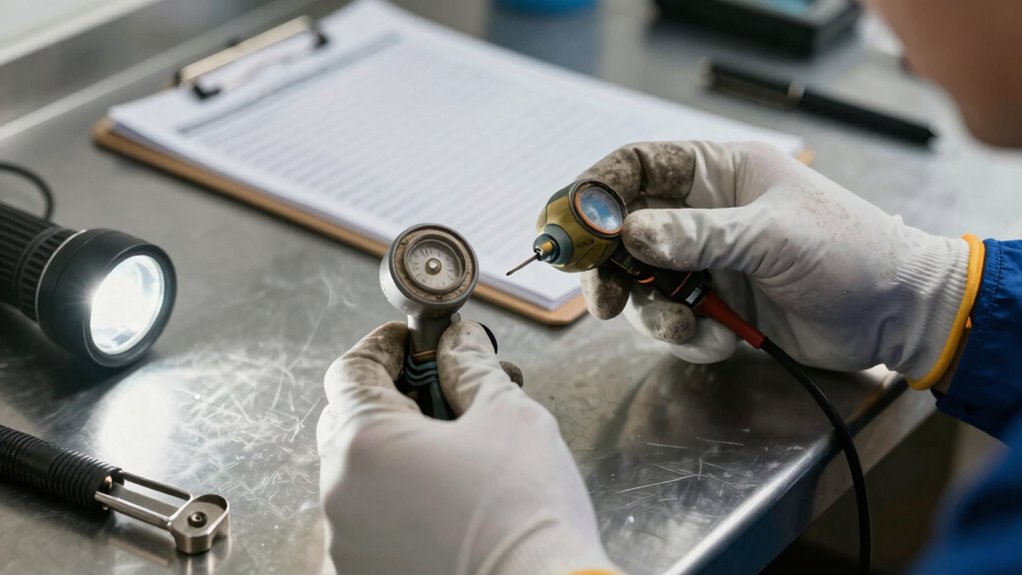
When you run quick pre-shift checks and simple procedural tests, you’ll catch most common failures before they become hazardous; brief, evidence‑based routines reduce undetected sensor drift, battery surprises, and mechanical blockages that studies link to false negatives and alarms.
Start by confirming instrument self-test and bump-test results against known span gas; that verifies sensor performance and response time without full calibration. Check battery charge and connector integrity—low voltage can shift readings toward detection limits.
Confirm self-test and bump-test responses with known span gas, and verify battery charge and connectors to prevent drift.
Inspect inlets, filters, and tubing for debris and condensation that alter flow and cause slow or missed alarms. Log each check with timestamp, operator, and result so trends show gradual sensor degradation before it crosses detection limits.
If a bump-test fails or response is sluggish, remove the unit from service and follow manufacturer troubleshooting: clean or replace filters, run a full calibration, or swap sensors.
Regular, documented pre-use routines are the most practical way to prevent field failures and maintain reliable gas detection.
Frequently Asked Questions
Can Gas Detectors Be Tampered With to Hide Dangerous Readings?
Yes — in subtle ways you can “adjust the story”: sensor modification or deliberate calibration issues can mask hazardous readings. You should verify seals, logs, and perform independent bump tests to detect tampering and guarantee safety.
How Do Manufacturing Defects Affect Detector Reliability?
Manufacturing defects undermine detector reliability by causing sensor calibration drift and inconsistent performance; you’ll see failures if quality control misses assembly faults, contaminated sensors, or faulty circuitry, so inspect batches, test calibration, and enforce strict QC.
Do Counterfeit or Uncertified Sensors Exist in the Market?
Yes — you’ll sometimes find counterfeit sensors and uncertified products on the market; studies and recalls show they’re real risks, so you should verify certifications, buy from authorized suppliers, and test devices regularly for performance.
Can Software Bugs or Firmware Updates Cause False Readings?
Yes — software bugs and firmware updates can cause false readings. You’ll face software vulnerabilities and firmware compatibility issues that corrupt calibration, data processing, or sensor drivers, so validate updates, test regressions, and maintain secure version control.
Are Gas Detectors Effective Against Intermittent or Pulsed Leaks?
Yes — but they’re limited: you’ll detect intermittent leaks and pulsed emissions only if sampling frequency, sensor response time, and placement match the pulse characteristics. Validate with high-speed logging, multiple sensors, and periodic leak simulation tests.