You might not realize that motion sensors can effectively ignore stationary objects by focusing solely on environmental changes. These sensors utilize advanced technology, such as passive infrared (PIR) detection, which identifies variations in heat radiation, or ultrasonic and microwave methods analyzing wave reflections. Algorithms enhance their ability to distinguish between dynamic and static elements. Curious about how these mechanisms minimize false positives and guarantee precise detection? There’s more to explore on this fascinating topic.
Understanding Motion Sensors
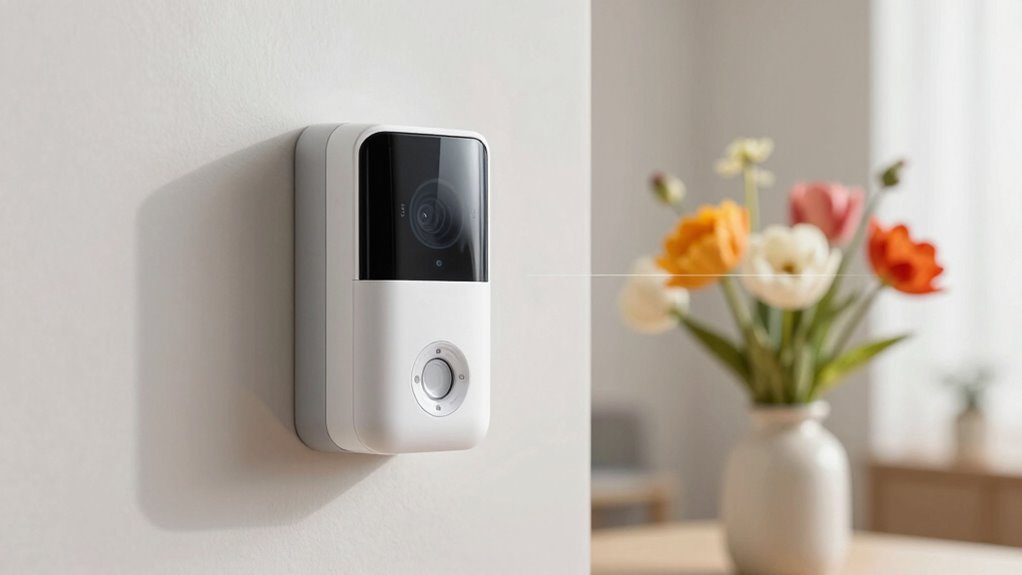
Motion sensors, integral components of modern security systems and automation technologies, detect physical movement in their environment. By utilizing advanced sensor technology, these devices identify changes in motion through various mechanisms such as infrared, ultrasonic, and microwave signals. Each technology type has unique properties that influence its effectiveness and suitability for specific applications.
For instance, passive infrared sensors are sensitive to heat changes, making them ideal for detecting human presence but less effective in environments with fluctuating temperatures.
You should be aware that application limitations are inherent in any sensor technology. Factors like environmental conditions, installation angle, and range can impact sensor performance. Consideration of these limitations is essential when selecting a motion sensor for your specific requirements.
For example, ultrasonic sensors may struggle with soft surfaces that absorb sound, while microwave sensors could face interference in metal-heavy environments. Understanding these aspects guarantees peak performance and reduces the likelihood of false alarms.
How Motion Sensors Detect Movement
While motion sensors utilize various technologies to detect movement, the underlying principle involves identifying changes in the environment that indicate motion. These sensors often rely on object recognition to discern moving entities from the static background. By analyzing shifts in position, speed, or direction, motion sensors can effectively determine movement.
Key to this process is sensor calibration, which guarantees the device accurately interprets environmental changes without false positives or negatives. Proper calibration adjusts the sensor’s sensitivity, allowing it to differentiate between genuine movement and irrelevant fluctuations.
Technologies such as passive infrared (PIR), ultrasonic, and microwave sensors each have unique detection methods but share this fundamental reliance on environmental change. With precise object recognition, these sensors can focus on moving objects while ignoring static ones.
Calibration fine-tunes this process, optimizing detection capabilities and minimizing errors. As a result, motion sensors achieve high accuracy and reliability in various applications, from security systems to automated lighting.
Why Do Motion Sensors Ignore Stationary Objects?

When you’re examining why motion sensors ignore stationary objects, it’s essential to understand the sensor detection mechanisms involved.
These sensors typically rely on changes in infrared radiation or Doppler shifts, which are only triggered by movement. Consequently, without detectable motion, such as variations in heat or frequency, stationary objects remain undetected.
Sensor Detection Mechanisms
Although motion sensors are widely used in various applications, their core functionality hinges on their ability to differentiate between moving and stationary objects.
Sensor types like passive infrared (PIR), ultrasonic, and microwave rely on sophisticated detection algorithms to accomplish this task. You’ll find that PIR sensors detect changes in infrared radiation, triggered by movement in their field of view.
On the other hand, ultrasonic sensors emit sound waves and measure the time it takes for them to return, identifying motion by noting shifts in wave reflections.
Microwave sensors operate similarly, using electromagnetic waves instead. The algorithms in these sensors are designed to filter out static signals, ensuring only dynamic changes, indicative of movement, are captured, thereby ignoring stationary entities effectively.
Analyzing Object Movement
To effectively analyze object movement, motion sensors employ intricate algorithms that distinguish between dynamic and static elements within their detection fields. These algorithms utilize object recognition techniques to identify and categorize various objects based on their movement patterns. By focusing on shifts in position, velocity, and trajectory, the sensors can determine whether an object is in motion or at rest.
You’ll find that motion sensors are programmed to prioritize detecting changes in movement patterns over time. Stationary objects don’t trigger alerts because they lack fluctuations in their spatial coordinates. This selective attention guarantees that only relevant, moving entities are detected, enhancing the sensor’s efficiency.
You’ll appreciate how this approach minimizes false positives, guaranteeing that the sensors accurately relay significant motion events while filtering out static background noise.
Everyday Uses of Motion Sensors
You likely encounter motion sensors daily in various forms, such as home security systems that detect unauthorized movement and alert you to potential threats.
They’re also integral to energy-efficient lighting, automatically turning lights on or off to conserve energy when spaces are unoccupied.
Additionally, automated door controls utilize motion sensors to guarantee seamless access without manual intervention, enhancing both convenience and hygiene.
Home Security Systems
When integrating motion sensors into home security systems, their primary function is to detect unauthorized movement within a designated area, thus providing an additional layer of protection.
In a smart home, these sensors play an important role in security integration, feeding real-time data to centralized systems. You can set up motion detectors to trigger alarms, notify security services, or activate cameras, guaranteeing thorough surveillance.
They’re designed to ignore stationary objects, preventing false alarms from things like furniture. For peak performance, placement is key; install them in areas with minimal obstructions and direct paths into the home.
This guarantees they detect intruders effectively without being triggered by non-threatening elements. As a result, understanding the environment is essential for maximizing their efficacy.
Energy Efficient Lighting
While motion sensors are pivotal in enhancing home security, they also greatly contribute to energy efficiency, particularly in lighting systems.
You’ll find that integrating motion sensors with smart lighting solutions optimizes energy conservation strategies. When no movement is detected, lights automatically turn off, minimizing unnecessary electricity usage. This precise control extends the lifespan of your lighting fixtures by reducing operational time.
Utilizing these sensors, you can strategically implement energy conservation strategies by setting specific time delays and sensitivity levels. This guarantees that lights activate only when required, thereby conserving energy.
In addition, smart lighting solutions offer remote control capabilities, allowing you to adjust settings via a smartphone or tablet. This adaptability enhances user convenience and guarantees maximum efficiency in energy utilization, aligning perfectly with sustainability goals.
Automated Door Controls
Although often overlooked in everyday life, automated door controls represent one of the most practical applications of motion sensors. By employing sensor technology, these systems facilitate seamless automated entry, enhancing accessibility and efficiency. As you approach a door equipped with these sensors, they detect your motion and trigger the mechanism to open. This system guarantees that doors react only to movement, thereby ignoring stationary objects, optimizing energy use.
| Feature | Benefit |
|---|---|
| Motion Detection | Efficient operation |
| Automated Entry | Enhanced accessibility |
| Energy Saving | Reduced power usage |
| Safety | Prevents collisions |
| Minimal Contact | Hygienic access |
These doors are prevalent in high-traffic areas, such as malls and hospitals, where quick, hands-free access is essential. With precision and reliability, automated door controls transform your daily interactions with entryways.
Overcoming Motion Sensor Challenges
Despite their widespread use, motion sensors often face challenges when detecting stationary objects. To overcome these challenges, you must focus on advanced sensor calibration techniques. Accurate calibration guarantees the sensors are fine-tuned to recognize subtle changes in the environment, which can help identify stationary objects more reliably. This often involves adjusting sensitivity settings to differentiate between background noise and actual objects.
Furthermore, you should consider environmental factors that can impact sensor performance. Elements such as lighting, temperature, and humidity can affect sensor accuracy. Making sure sensors are adequately shielded or adjusted for these conditions can greatly enhance their ability to detect stationary objects.
Additionally, integrating multiple sensor types, like combining infrared and ultrasonic technologies, can provide a more thorough detection system. By addressing calibration and environmental influences, you can greatly mitigate the limitations of motion sensors, enhancing their capability to detect stationary objects effectively.
What’s Next for Motion Sensors?

As technology continues to evolve, motion sensors are poised to become even more sophisticated and versatile. You can expect future advancements to focus on enhancing sensitivity and accuracy, allowing these devices to detect minuscule movements and differentiate between objects with improved precision.
The integration of artificial intelligence will be essential, enabling motion sensors to learn and adapt over time, enhancing their ability to operate in diverse environments.
Smart integration with IoT (Internet of Things) ecosystems will be pivotal. You’ll see motion sensors seamlessly communicating with other smart devices, offering automated responses based on real-time data.
Imagine a home where motion sensors not only activate lighting but adjust HVAC systems based on occupancy patterns. In industrial settings, sensors could optimize workflows by monitoring equipment activity and minimizing downtime.
Such advancements will transform how you interact with your environment, making systems more intuitive and responsive.
Frequently Asked Questions
Can Motion Sensors Be Affected by Extreme Weather Conditions?
In nature’s tumultuous symphony, extreme weather can indeed challenge motion sensors’ performance, akin to a maestro disrupted by a storm. Weather impact can distort readings, causing inaccuracies and necessitating adjustments to maintain ideal sensor functionality.
What Types of Technologies Are Used in Motion Sensors?
You’ll find motion sensors often use infrared technology to detect heat signatures and ultrasonic sensors for sound wave reflections. These technologies precisely analyze movement patterns, offering reliable detection while minimizing false alarms from stationary objects.
How Do Motion Sensors Differentiate Between Humans and Pets?
You’d find motion sensors use algorithms for human detection and pet recognition, analyzing size, heat, and movement patterns. They might adjust sensitivity to differentiate between larger humans and smaller pets, reducing false alarms effectively.
Can Motion Sensors Be Integrated With Smart Home Systems?
Yes, you can integrate motion sensors with smart home systems. Guarantee motion detection compatibility by selecting devices supporting your platform. Analyze specifications for seamless smart home integration, enhancing automation efficiency and security with synchronized sensor responses across connected devices.
Are Motion Sensors Energy Efficient and Environmentally Friendly?
Yes, motion sensors are energy efficient, minimizing energy consumption by activating only when detecting movement. They reduce environmental impact, conserving resources and lowering emissions, making them a sustainable choice for energy-conscious and eco-friendly applications in smart systems.