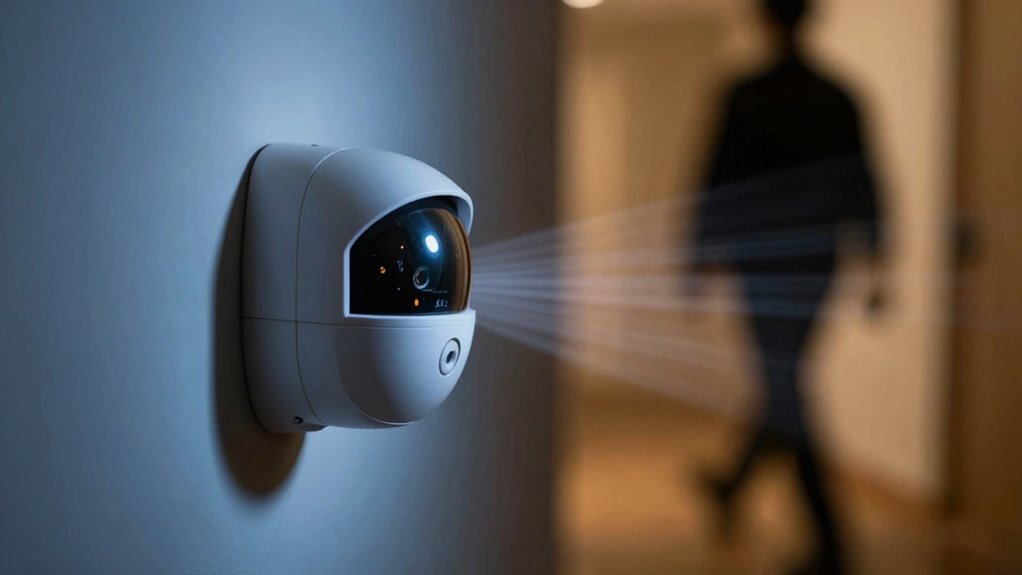
You’re constantly surrounded by invisible heat signatures, unknowingly emitting infrared radiation with every movement. PIR sensors leverage this phenomenon, converting thermal energy into precise electrical signals without active transmission. These sophisticated devices capture temperature differentials, transforming imperceptible body heat into actionable detection mechanisms. Wondering how an inanimate sensor can distinguish human presence from environmental noise? The technological magic lies in its pyroelectric core—a domain where physics meets intelligent monitoring.
What Makes PIR Sensors Different From Other Motion Detection Tech
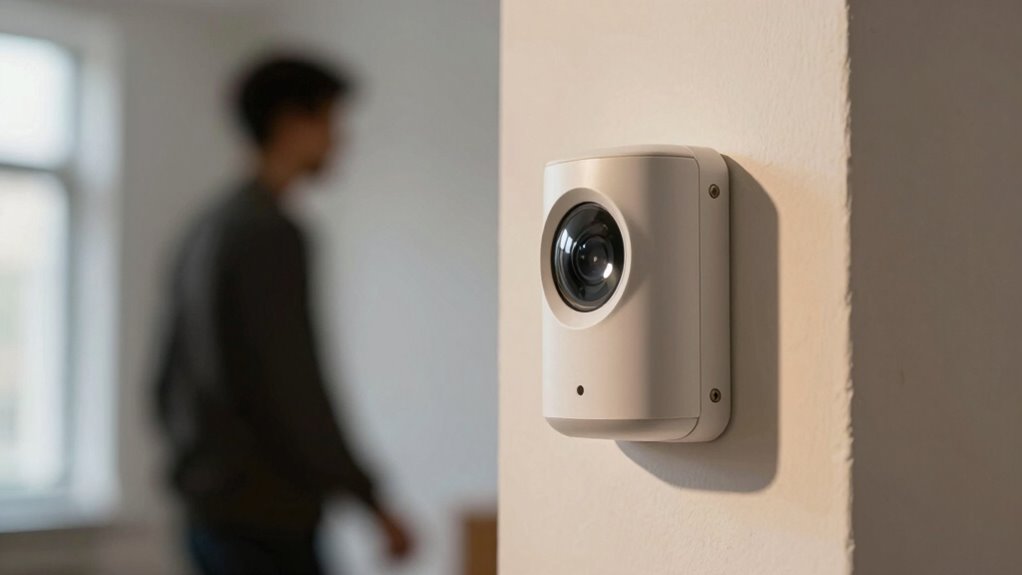
While many motion detection technologies exist, Passive Infrared (PIR) sensors stand apart through their unique method of detecting thermal radiation emitted by living organisms. Unlike radar or ultrasonic technologies, PIR sensors exclusively capture infrared energy variations, giving them significant advantages in precision and power efficiency.
PIR sensors uniquely detect thermal radiation, offering precision and power efficiency beyond traditional motion technologies.
You’ll find that PIR sensor advantages stem from their ability to detect heat signatures without requiring active signal transmission. Where other motion detection technologies send out waves or signals and measure their reflection, PIR sensors passively read temperature changes within their detection zone.
When comparing motion detection methods, PIR sensors excel in low-power environments and scenarios requiring minimal energy consumption. They’re particularly effective in security systems, lighting control, and automated environments where detecting human presence must be instantaneous and accurate.
Their specialized pyroelectric sensors convert infrared radiation directly into electrical signals, enabling rapid, reliable human detection with remarkable sensitivity.
How Humans Become Invisible Heat Signatures
You’re constantly emitting thermal radiation, but environmental factors can mask your body heat signature from PIR sensors.
By understanding thermal camouflage techniques and environmental interference patterns, you can potentially disrupt the sensor’s ability to detect infrared emissions.
Temperature gradients, reflective surfaces, and ambient thermal noise can create conditions where your heat signature becomes indistinguishable from background radiation.
Thermal Radiation Emission
Because all warm objects emit thermal radiation, humans continuously radiate infrared energy based on their core body temperature.
You’ll find that this thermal emission occurs across a specific spectrum, making your body a detectable heat source:
- Typical human body temperature (~98.6°F) generates infrared wavelengths between 9-10 micrometers
- Radiation detection relies on measuring these precise infrared emissions
- The intensity of thermal radiation correlates directly with surface temperature
- Skin and surrounding tissues contribute to overall heat signature
Passive infrared sensors leverage these fundamental principles to identify human presence.
Your body’s natural thermal radiation becomes a unique identifier, allowing precise detection through sophisticated sensor technologies that can distinguish minute temperature variations in environmental spaces.
Body Heat Masking
Despite sophisticated thermal detection mechanisms, humans can strategically manipulate their heat signatures, rendering themselves less detectable by PIR sensors through calculated thermal camouflage techniques.
Your body heat masking strategies involve understanding environmental impact and sensor vulnerabilities. By minimizing temperature differential between your body and surrounding surfaces, you can reduce thermal contrast that PIR sensors typically detect.
Thermal shielding materials like reflective fabrics or specialized thermal-blocking clothing can considerably diminish infrared radiation emission.
Advanced body heat masking involves precise temperature regulation, strategic positioning relative to background thermal landscapes, and exploiting sensor limitations in distinguishing subtle thermal gradients.
Understanding sensor detection thresholds and environmental thermal dynamics becomes critical in developing effective thermal concealment approaches.
5 Breakthrough Applications Transforming Smart Spaces

You’ll discover that PIR sensors are revolutionizing intelligent space detection through cutting-edge smart security solutions.
These advanced technologies enable precise human presence tracking in complex environments, transforming how spaces monitor and respond to occupancy.
Intelligent Space Detection
How can intelligent space detection revolutionize our understanding of human interaction with built environments?
PIR sensors enable sophisticated smart environment monitoring through precise spatial analysis. You’ll discover their transformative capabilities across various domains:
- Automated lighting systems that dynamically adjust illumination based on occupancy
- Advanced security protocols detecting unauthorized movements with millisecond precision
- Energy management strategies optimizing resource consumption in real-time
- Adaptive workspace configurations responding instantaneously to human presence
These intelligent detection mechanisms transcend traditional environmental sensing.
By leveraging infrared radiation mapping and advanced algorithmic processing, PIR sensors create nuanced spatial intelligence.
They’re not just passive observers but active interpreters of human movement, translating thermal signatures into actionable data streams that reshape how we conceptualize and interact with architectural spaces.
Smart Security Solutions
Building upon the intelligent spatial detection capabilities of PIR sensors, smart security solutions represent a quantum leap in architectural protection and threat mitigation.
You’ll find that these advanced systems integrate seamlessly into smart home environments, providing extensive security coverage through sophisticated sensor networks.
The technology leverages PIR sensor data to create multi-layered security integration strategies. By analyzing thermal signatures and movement patterns, these solutions can distinguish between potential intrusions and routine household activities.
Advanced algorithms enable real-time threat assessment, triggering immediate notifications or automated response protocols.
Modern smart security solutions aren’t just reactive; they’re predictive. They can learn behavioral patterns, identify anomalies, and provide granular insights into potential security risks, transforming how you protect your living and working spaces.
Inside the Sensor: Decoding Infrared Signal Conversion
When a human moves within a PIR sensor‘s detection range, the device’s signal conversion process transforms infrared radiation into an electrical signal through a sophisticated mechanism. This sensor technology relies on precise infrared signal interpretation to detect human presence.
The conversion process involves:
- Pyroelectric sensors capturing thermal radiation emitted by human bodies
- Specialized infrared filters segregating specific wavelength ranges
- Amplification circuits enhancing weak electrical signals generated
- Comparison circuitry identifying temperature differential changes
You’ll find that these sensors operate by detecting minute temperature variations within their field of view. The pyroelectric element becomes critical in this process, generating electrical charges proportional to incident infrared radiation.
As you move, your body’s heat creates dynamic thermal patterns that trigger the sensor’s internal electronics. Each sensor’s design guarantees rapid, accurate signal translation, converting thermal energy into measurable electrical impulses with remarkable precision.
This intricate mechanism enables reliable human presence detection across various environmental conditions.
When PIR Sensors Work Best (and When They Don’t)
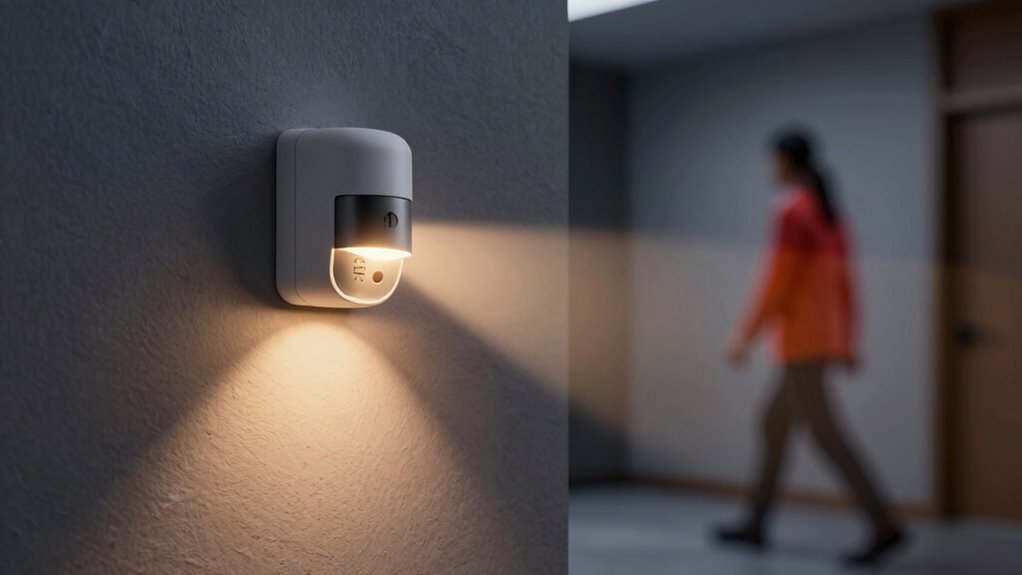
Understanding the intricacies of signal conversion sets the stage for evaluating PIR sensor performance across diverse operational environments. You’ll find that PIR sensors excel under specific ideal conditions, with environmental factors playing a vital role in their effectiveness.
| Condition | Performance | Recommended Use |
|---|---|---|
| Indoor, Room Temp | Excellent | Security Systems |
| Direct Sunlight | Poor | Avoid Placement |
| High Humidity | Moderate | Use with Caution |
| Narrow Hallways | Very Good | Motion Detection |
When deploying PIR sensors, you’ll want to take into account key performance parameters. Temperature range, humidity levels, and installation angle dramatically impact sensor sensitivity. Direct sunlight can overwhelm infrared detection, causing false triggers or signal degradation. Metallic surfaces and rapid temperature fluctuations can also compromise sensor accuracy.
Ideal placement involves strategic positioning: mounting height between 2-3 meters, avoiding direct heat sources, and ensuring unobstructed sensor view. By understanding these essential environmental constraints, you’ll maximize PIR sensor reliability and performance.
Active vs. Passive: Choosing the Right Infrared Technology
Because infrared technology encompasses diverse detection methodologies, distinguishing between active and passive systems becomes crucial for precise sensor selection.
When evaluating infrared sensor technologies, you’ll want to take into account these critical distinctions:
- Active Technology: Continuously emits infrared radiation and measures reflected signals, ideal for detecting motion and intrusion in controlled environments.
- Passive Technology: Receives electromagnetic radiation without transmitting, analyzing thermal variations to detect human presence, making it energy-efficient and less intrusive.
- Detection Range: Active systems typically provide longer detection ranges, while passive technologies excel in shorter, more focused proximity sensing.
- Power Consumption: Passive infrared (PIR) sensors consume markedly less power compared to active infrared technologies, making them preferable for battery-operated applications.
Your selection should prioritize specific requirements: environmental conditions, power constraints, and desired detection sensitivity.
Understanding these fundamental differences guarantees you’ll choose the most appropriate infrared sensing technology for your specific application, balancing performance, efficiency, and precision.
Maximizing PIR Sensor Performance: Pro Installation Tips
After exploring the nuanced differences between active and passive infrared technologies, strategic PIR sensor placement emerges as a critical factor in maximizing detection performance.
You’ll want to evaluate key sensor placement strategies that enhance coverage and minimize false triggers. When installing PIR sensors, you’ll need to assess environmental factors meticulously.
Mount sensors at recommended heights—typically 6-8 feet—to capture ideal human movement patterns. Avoid positioning sensors near heat sources, air vents, or direct sunlight, which can cause erratic readings. Guarantee clear, unobstructed pathways within the sensor’s detection zone, eliminating potential interference from large objects or moving curtains.
Evaluate mounting angles that provide thorough room coverage while preventing blind spots. Use mounting brackets that allow precise adjustment, enabling you to fine-tune detection sensitivity.
Remember that reflective surfaces and complex room geometries can impact sensor performance, so test and recalibrate systematically to achieve reliable human presence detection.
Common PIR Sensor Failures and How to Prevent Them
While PIR sensors are generally reliable, they can experience performance degradation due to various technical limitations. Understanding potential failures helps you maintain peak sensor performance:
- Sensor Calibration Issues: Improper initial calibration can lead to false triggers or missed detection. Regularly recalibrate sensors to guarantee accurate motion sensing.
- Environmental Interference: Temperature fluctuations, air currents, and reflective surfaces can disrupt PIR sensor functionality. Install sensors away from heating/cooling vents and direct sunlight.
- Electrical Noise: Electromagnetic interference from nearby electrical equipment can cause erratic sensor behavior. Use shielded cables and maintain proper grounding to minimize signal disruption.
- Aging Components: Sensor sensitivity decreases over time due to component wear. Replace sensors proactively every 5-7 years to maintain reliable performance.
Frequently Asked Questions
Can PIR Sensors Detect Animals or Pets Through Walls?
You’ll find PIR sensors can’t effectively detect animals through walls due to limited wall penetration capabilities; animal detection requires direct infrared radiation line-of-sight, rendering wall-based sensing impractical.
How Much Electricity Do PIR Sensors Consume During Operation?
You’ll be enlightened to know PIR sensors consume minimal electricity, typically 0.1-1W, showcasing remarkable energy efficiency and making them an economically viable, low-power motion detection technology for various applications.
Are PIR Sensors Safe for People With Medical Implants?
PIR sensors are generally safe for medical implants, as they emit low-energy infrared radiation. You’ll want to consult your device manufacturer for specific implant compatibility and medical safety recommendations.
Do PIR Sensors Work Effectively in Extreme Temperature Environments?
You’ll find PIR sensors have limited effectiveness in extreme conditions due to their temperature sensitivity. Performance degrades at temperature extremes, potentially causing unreliable detection and reduced sensor accuracy.
Can Multiple PIR Sensors Interfere With Each Other’s Signals?
You’ll minimize signal interference by strategically positioning PIR sensors, ensuring they’re not facing each other directly and maintaining adequate spatial separation to prevent cross-detection and false triggering.