Leak sensors detect water presence primarily through changes in electrical conductivity, moisture levels, or pressure variations, integrating components such as electrodes, humidity sensors, and microcontrollers to monitor environmental conditions. The detection process involves measuring subtle signal shifts caused by water contact, which can be delayed due to sensor sensitivity thresholds, material absorption rates, and ambient factors like temperature and humidity. This article examines the causes of detection delays in leak sensors, focusing on sensor design limitations, environmental influences, and signal processing mechanisms. It further explores how these factors impact response times and reliability in early leak identification.
How Leak Sensors Detect Water and Trigger Alerts
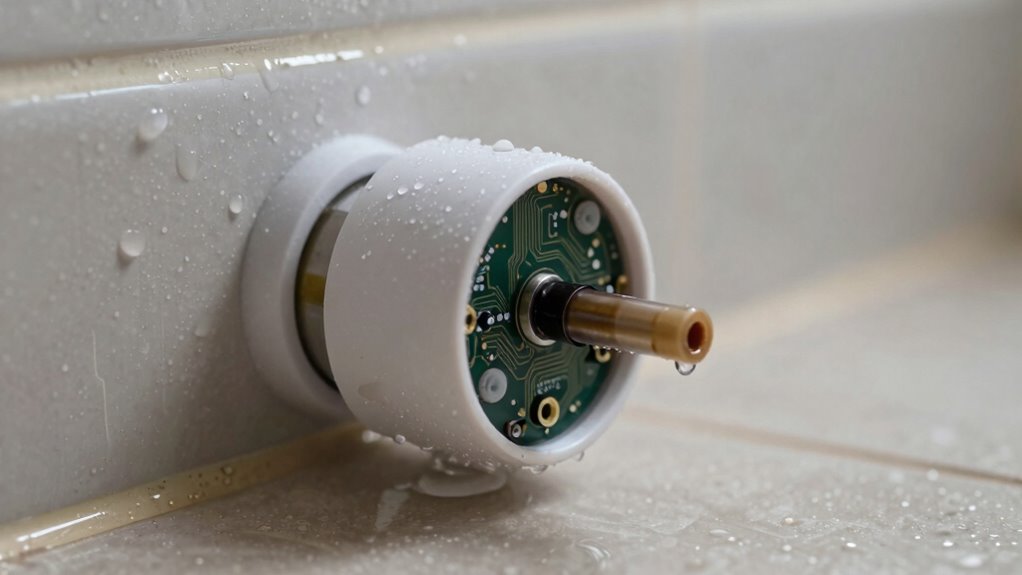
When water comes into contact with a leak sensor, the device detects the presence through changes in electrical conductivity or capacitance. This sensing technology relies on the principle that water alters the electrical properties between sensor electrodes. As water bridges these points, conductivity increases or capacitance shifts, signaling a leak.
Water detection hinges on changes in electrical conductivity or capacitance between sensor electrodes.
You’ll find that modern sensors continuously monitor these parameters, enabling rapid detection. Once a change surpasses a predefined threshold, the sensor’s alert mechanisms activate. These mechanisms can include audible alarms, visual indicators, or digital notifications sent to your smartphone or monitoring system.
The precision of these alerts depends on the sensor’s calibration and sensitivity, ensuring you’re informed only when genuine leaks occur. This balance between detection accuracy and false alarm prevention is essential for maintaining your freedom from constant worry.
Understanding this process empowers you to select leak sensors that effectively combine advanced sensing technology with reliable alert mechanisms, optimizing your control over potential water damage.
How Sensor Placement Affects Detection Speed
Although leak sensors employ advanced detection methods, their effectiveness largely depends on where you position them.
Sensor orientation is critical; orienting the sensor so its detection elements are directly exposed to potential water paths reduces detection delay. If positioned horizontally when water flows vertically, response slows due to uneven exposure.
Installation height also plays a pivotal role. Placing sensors too high above likely leak points can cause water to pool before reaching the sensor, increasing detection time. Conversely, installing sensors too low risks false alarms from minor condensation or spills.
To optimize detection speed, you need to analyze the environment’s water flow dynamics and select a placement height that intersects probable leak channels promptly. Additionally, verify the sensor orientation aligns with expected leak direction to maximize immediate contact.
How Water Conductivity Influences Leak Sensor Response
You’ll notice that water conductivity directly affects leak sensor sensitivity, as higher ionic content enhances signal detection.
Since water purity varies, it can considerably alter response times, requiring careful sensor calibration for accurate readings.
Understanding these factors is essential to minimizing detection delays in different environments.
Conductivity Levels And Sensitivity
Since water conductivity directly affects the electrical properties that leak sensors monitor, understanding its impact is essential for optimizing sensor sensitivity.
Conductivity measurement informs how quickly and accurately a sensor detects a leak. When conductivity levels vary, sensor sensitivity must adjust accordingly to prevent false negatives or delayed alerts.
Here’s what you need to evaluate:
- Low conductivity water reduces current flow, requiring higher sensor sensitivity for prompt detection.
- High conductivity water increases current flow, which can cause sensors to trigger prematurely if sensitivity isn’t calibrated properly.
- Dynamic conductivity environments demand adaptive sensitivity settings to maintain reliable detection without compromising freedom in sensor placement.
Impact Of Water Purity
When water purity varies, it directly alters conductivity levels, which in turn affects how leak sensors respond to the presence of moisture. Water mineralization changes ionic content, influencing sensor detection thresholds. Highly purified water has low conductivity, potentially delaying sensor activation, while mineral-rich water triggers faster responses due to higher conductivity. Understanding this relationship is essential for accurate leak detection.
| Water Type | Conductivity (µS/cm) | Typical Detection Threshold (mS) |
|---|---|---|
| Distilled | 0-10 | High |
| Soft Water | 50-150 | Medium-High |
| Tap Water | 200-800 | Medium |
| Hard Water | 800-1500 | Low |
| Mineral-Rich Water | 1500+ | Very Low |
Adjusting for water purity helps prevent detection delays by aligning sensor thresholds with actual conductivity.
Sensor Calibration For Accuracy
Understanding how water conductivity impacts sensor response is key to properly calibrating leak detection systems. Different sensor types—resistive, capacitive, or optical—react uniquely to conductivity variations, affecting detection speed and accuracy.
To guarantee peak sensor performance, you need precise calibration techniques tailored to your environment’s water conductivity. Consider these steps:
- Measure baseline conductivity of the expected water source to set sensor sensitivity thresholds.
- Apply calibration curves specific to your sensor type to correlate conductivity levels with sensor output signals.
- Regularly recalibrate sensors to compensate for changes in water purity or environmental conditions that alter conductivity.
How Temperature and Humidity Affect Leak Sensor Delays
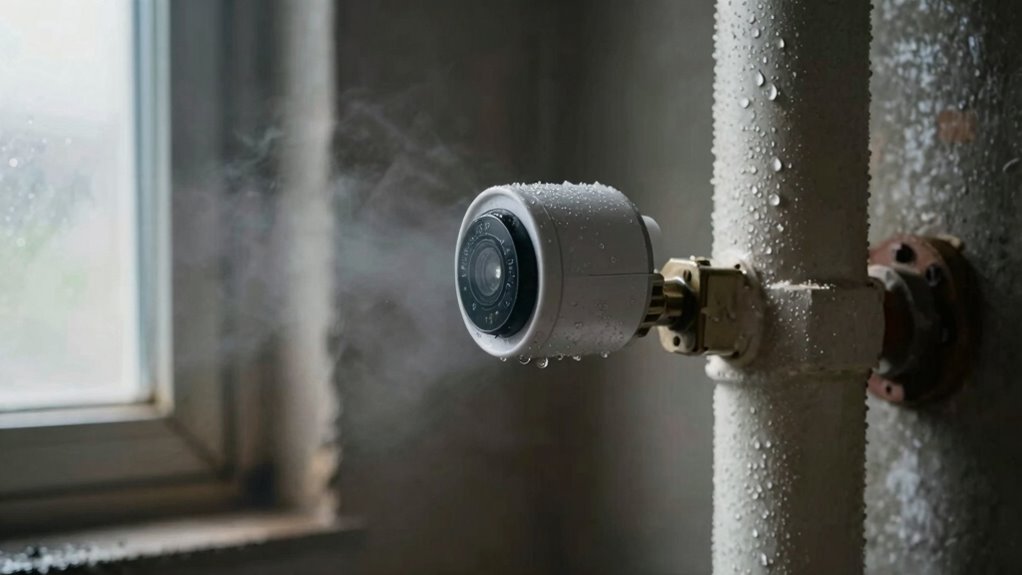
Although leak sensors are designed to respond quickly, fluctuations in temperature and humidity can considerably influence their detection delay. Temperature fluctuations affect the sensor’s internal components, causing changes in electrical resistance or capacitance, which can slow response times. High humidity levels may interfere with sensor accuracy by causing condensation or moisture accumulation, leading to false readings or delayed alerts. Understanding these environmental impacts helps you optimize sensor placement and maintenance.
| Environmental Factor | Impact on Detection Delay |
|---|---|
| Low Temperature | Increased response time due to slowed sensor reactions |
| High Temperature | Potential sensor drift, affecting accuracy |
| Low Humidity | Minimal impact, quick detection maintained |
| High Humidity | Moisture interference causing delayed or false alerts |
| Rapid Fluctuations | Sensor recalibration needed, increasing delay |
How Technology Limits Slow Leak Sensor Detection
Since leak sensors rely on specific technological components, their detection speed is inherently constrained by factors such as sensor sensitivity, signal processing capabilities, and power management. You need to understand these limitations if you want precise leak detection without unnecessary delays.
- Sensor Technology: The fundamental materials and design determine how quickly a sensor identifies moisture presence. Lower sensitivity sensors might miss slow leaks until a threshold is crossed, delaying alerts.
- Signal Processing: Once detected, the sensor’s onboard algorithms filter noise and confirm leaks. Complex processing to reduce false positives can introduce latency, affecting real-time responsiveness.
- Power Management: To conserve energy, especially in battery-operated devices, sensors often operate in low-power modes, periodically scanning rather than continuously monitoring. This trade-off slows detection of slow leaks.
How Power and Connectivity Issues Cause Detection Delays
Beyond the inherent limitations of sensor technology and signal processing, power and connectivity issues play a significant role in delaying leak detection. When you experience power fluctuations, the sensor’s ability to operate consistently degrades, causing intermittent lapses in data acquisition and transmission.
These lapses translate directly into delayed alerts, as the sensor may miss important early leak signatures during unstable power conditions. Connectivity interruptions further exacerbate this issue by breaking the communication link between the sensor and the monitoring system.
Delayed alerts occur as sensors miss early leak signs during power instability and broken connectivity.
If data packets fail to transmit in real-time, you won’t receive timely notifications, reducing your capacity for prompt response. Additionally, recovery from these interruptions often involves buffering or retransmission, which adds latency.
Both power fluctuations and connectivity interruptions disrupt the continuous data flow essential for immediate leak detection. To maintain your autonomy in monitoring, it’s vital to recognize how these technical vulnerabilities create detection delays that compromise system reliability and your freedom to act swiftly.
Practical Tips to Minimize Leak Sensor Detection Delays
To minimize detection delays, you need to optimize sensor placement by positioning units at essential leak points and low-lying areas where water accumulates quickly.
Regular maintenance is vital to guarantee sensor functionality, including testing responsiveness and checking for corrosion or debris.
Sensor Placement Optimization
Although selecting the right sensor technology is essential, how and where you place leak sensors can have an even greater impact on detection delay.
You must consider sensor types and installation guidelines to optimize placement effectively. Here’s how to minimize detection delays:
- Identify critical leak points—focus sensors near joints, valves, or low spots where leaks often start.
- Ensure proper sensor height and orientation—position sensors according to manufacturer installation guidelines to maximize exposure to leaks.
- Avoid obstructions and environmental interference—keep sensors clear of insulation, debris, or equipment that could delay detection.
Regular Maintenance Importance
Since even the best-placed sensors can degrade over time, regular maintenance is essential to guarantee they function at their best and minimize detection delays. You need to conduct regular inspections and routine testing to detect sensor drift, corrosion, or battery depletion early. This proactive approach preserves sensor sensitivity and responsiveness, reducing false negatives and lag.
| Task | Frequency | Purpose |
|---|---|---|
| Sensor Cleaning | Monthly | Remove debris affecting sensors |
| Battery Check | Quarterly | Prevent power-related failures |
| Functional Test | Biannual | Verify sensor responsiveness |
When to Upgrade Leak Sensors for Faster Alerts
When your current leak sensors consistently report delays that exceed acceptable thresholds, it’s essential to evaluate upgrading them for faster alerts.
Identifying clear upgrade indicators helps you maintain control and prevent costly damage. Advances in sensor technology now offer quicker response times and improved accuracy, which are vital for timely leak detection.
Consider upgrading if you observe:
- Increasing detection delay beyond the sensor’s rated specification, indicating sensor degradation or outdated technology.
- Frequent false negatives or missed leaks, suggesting sensitivity limitations in older models.
- Integration issues with modern smart home systems, where newer sensors provide seamless connectivity and real-time notifications.
Frequently Asked Questions
Can Leak Sensors Detect Leaks From Non-Water Fluids?
Yes, you can use leak sensors for non water fluids, but their effectiveness depends on the sensor’s design and sensitivity. Some sensors specialize in non water fluids leak detection, ensuring accurate alerts without false positives, granting you reliable freedom.
Do Leak Sensors Require Regular Calibration for Accuracy?
Don’t you want your leak sensor to stay reliable? Yes, regular calibration is essential. Calibration frequency depends on the sensor type and environment, ensuring ideal sensor accuracy and giving you freedom from false alarms or missed leaks.
How Do Leak Sensors Differentiate Between Small and Large Leaks?
You’ll notice leak sensors differentiate small leak detection from large leak identification by analyzing signal intensity and duration, allowing you to respond precisely and maintain control over your system’s integrity and freedom from damage or waste.
Are Leak Sensors Affected by Electromagnetic Interference?
Think of electromagnetic fields as static noise that can disrupt your sensor’s sensitivity, causing false alarms or missed leaks. To maintain accuracy, you’ll need shielding or filtering methods that guarantee the sensor’s freedom from interference.
Can Leak Sensors Integrate With Smart Home Systems?
Yes, you can integrate leak sensors with smart home systems, but sensor integration challenges like protocol compatibility and signal interference may arise. Ensuring smart home compatibility requires careful selection of devices supporting common standards like Zigbee or Z-Wave.