Detecting hidden mechanical faults relies on analyzing sound and vibration signatures generated by components such as bearings, shafts, gears, and motors. Variations in frequency and amplitude occur because defects like misalignment, imbalance, or wear alter the dynamic behavior of these elements, producing characteristic acoustic and vibrational patterns. This article examines how signal analysis can differentiate between normal operational noise and indicators of underlying faults, focusing on diagnostic techniques, common vibration patterns, and frequency domain interpretation. Understanding these principles enables early identification of mechanical issues before they manifest as visible damage or system failure.
What Is Sound and Vibration Analysis for Problem Detection?
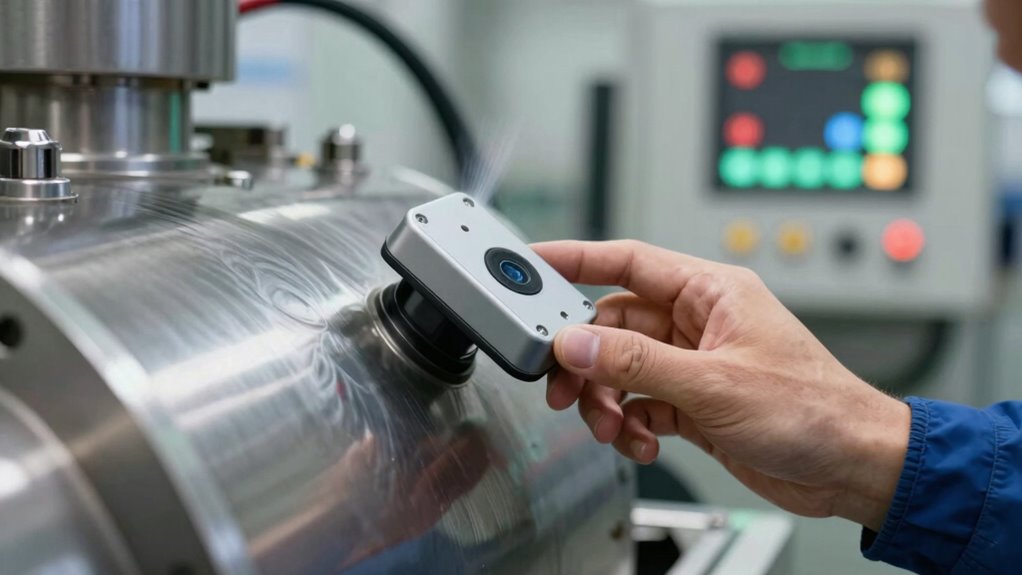
Although you mightn’t realize it, sound and vibration analysis plays an essential role in identifying mechanical faults before they escalate. When you employ this technique, you systematically measure sound frequency and vibration amplitude emitted by machinery.
These parameters offer critical insight into the operational condition of equipment. Deviations from baseline sound frequency patterns indicate potential issues like imbalance or misalignment, while abnormal vibration amplitude can signal wear or structural defects.
By analyzing these signals, you gain a precise understanding of fault progression, enabling timely maintenance interventions. This analytical approach liberates you from unexpected breakdowns, ensuring operational continuity.
It’s a non-invasive diagnostic method that quantifies subtle changes imperceptible to the human ear or sight. Ultimately, sound and vibration analysis empowers you to proactively manage mechanical health, preventing failures that restrict your freedom to operate efficiently and safely.
How Sound Reveals Hidden Flaws in Materials
Building on the principles of sound and vibration analysis for machinery, sound waves can also uncover hidden flaws within materials themselves. When you deploy acoustic imaging, you capture detailed sound wave reflections, which reveal internal inconsistencies like cracks or voids. These flaws alter the vibration signatures, producing anomalies detectable through precise analysis. By interpreting these changes, you gain insights into material integrity without invasive methods.
| Flaw Type | Acoustic Imaging Effect | Vibration Signature Change |
|---|---|---|
| Crack | Distorted wave reflection | High-frequency spikes |
| Void | Signal attenuation | Reduced amplitude |
| Delamination | Irregular echo patterns | Phase shifts |
| Inclusion | Scattering of sound waves | Complex harmonic distortions |
Using this data, you can identify and localize defects, ensuring reliability and safety. This approach empowers you to detect subtle material flaws that otherwise remain invisible.
Why Do Vibration Patterns Signal Equipment Issues?

You can detect equipment issues by identifying anomalous vibrations that deviate from normal operational patterns.
These irregular vibration signatures correlate directly with specific faults, allowing you to pinpoint underlying problems.
Understanding these patterns enhances your ability to perform targeted maintenance before failures occur.
Identifying Anomalous Vibrations
Vibration patterns act as diagnostic fingerprints that reveal the operational health of machinery. When you analyze these vibration signatures, anomaly detection becomes critical; it helps you distinguish normal from abnormal behavior in complex systems.
Each machine produces a characteristic vibration profile under regular conditions, so even subtle deviations signal potential issues. By continuously monitoring vibration data, you gain the freedom to pinpoint irregularities early, preventing unexpected failures.
You’ll rely on precise algorithms that quantify changes in frequency, amplitude, and waveform shape, enabling you to identify anomalous vibrations objectively. This approach minimizes guesswork, empowering you to make informed maintenance decisions based on quantifiable evidence rather than assumptions.
Ultimately, mastering anomaly detection in vibration signatures lets you safeguard equipment reliability and extend its operational lifespan efficiently.
Correlating Patterns With Faults
Detecting anomalies in vibration signatures is only part of the process; understanding why these patterns indicate specific equipment faults is what drives effective diagnostics.
You rely on pattern recognition to systematically analyze vibration data, identifying consistent signatures linked to mechanical issues like imbalance, misalignment, or bearing defects.
Fault correlation then connects these signatures to underlying causes, allowing you to pinpoint problems before they escalate.
By mapping distinct vibration frequencies and amplitudes to known fault types, you gain actionable insights that guide maintenance decisions.
This analytical approach not only enhances diagnostic accuracy but also optimizes equipment uptime, giving you the freedom to focus on strategic tasks rather than unexpected breakdowns.
Mastering these correlations empowers you to interpret vibration patterns as reliable indicators of hidden faults.
Common Hidden Problems Detected by Sound and Vibration
You can identify mechanical faults early by analyzing specific vibration frequencies and sound anomalies.
Structural integrity issues often manifest as subtle changes in vibration patterns that you can monitor to prevent failure.
Additionally, sound and vibration analysis allows you to detect irregularities in electrical equipment before they escalate into critical problems.
Mechanical Faults Identification
Although mechanical faults often start as minor issues, they can be identified early through careful analysis of sound and vibration patterns. By deploying mechanical sensors, you can capture subtle changes in operational behavior that indicate wear, imbalance, misalignment, or looseness.
Vibration analysis allows you to quantify these anomalies by measuring frequency, amplitude, and waveform characteristics. Detecting deviations from baseline signals enables timely intervention before faults escalate, reducing downtime and maintenance costs.
You’ll benefit from pinpointing issues like bearing defects or gear tooth damage through spectral analysis, which isolates specific frequencies associated with mechanical components. This data-driven approach grants you the freedom to act proactively, ensuring machinery reliability and extending equipment life without invasive inspections.
Harnessing sound and vibration data transforms hidden faults into measurable, actionable insights.
Structural Integrity Assessment
When structural components experience stress or degradation, subtle changes in sound and vibration can reveal hidden defects such as cracks, corrosion, or loosening joints.
By employing vibration monitoring, you can detect anomalies in frequency and amplitude that indicate compromised integrity before visible damage occurs. This proactive structural assessment enables targeted maintenance, minimizing downtime and preventing catastrophic failure.
You’ll analyze vibration signatures to identify shifts from baseline conditions, focusing on resonance changes or unusual acoustic emissions. Advanced sensors capture high-resolution data, allowing precise localization of weaknesses within beams, supports, or welds.
Utilizing these techniques guarantees your structures maintain safety and performance standards, granting you operational freedom without unexpected interruptions.
Sound and vibration analysis consequently becomes an indispensable tool for maintaining the longevity and reliability of critical infrastructure.
Electrical Equipment Monitoring
While electrical equipment often operates silently, subtle sound and vibration patterns can reveal early signs of malfunction. By applying advanced monitoring techniques, you can detect electrical failures such as arcing, loose connections, and bearing defects before they escalate.
Acoustic emissions and vibration analysis allow you to pinpoint anomalies in transformers, motors, and switchgear with precision. These diagnostic tools help differentiate between normal operational noise and indicators of distress, empowering you to intervene proactively.
Utilizing real-time data collection and spectral analysis, you gain insight into component degradation, preventing unexpected downtime. Embracing these sound and vibration monitoring techniques gives you the freedom to maintain system reliability efficiently, reduce repair costs, and extend equipment lifespan through informed maintenance decisions.
Tools and Sensors for Capturing Sound and Vibration Data
Since detecting hidden problems relies heavily on accurate data acquisition, selecting the right tools and sensors for capturing sound and vibration is essential. You’ll want to focus on advanced microphone technology that offers high sensitivity and a wide frequency response range, ensuring subtle acoustic anomalies aren’t missed.
Directional microphones help isolate specific sound sources, enhancing diagnostic precision. For vibration data, choose vibration sensors like accelerometers and piezoelectric sensors, which convert mechanical motion into measurable electrical signals. These sensors provide high-resolution temporal data vital for identifying irregularities in machinery or structural components.
Additionally, consider sensor placement and environmental factors to minimize noise interference. Combining robust microphone technology with precise vibration sensors enables thorough monitoring, empowering you to detect faults early and maintain system integrity.
Your choice in these tools directly impacts the reliability of the data, influencing your ability to diagnose and respond effectively without unnecessary constraints.
How to Analyze Acoustic Signals for Diagnostics

You’ll start by applying signal processing techniques like Fourier transforms and wavelet analysis to convert raw acoustic data into meaningful frequency and time-domain representations.
Then, focus on identifying anomalous patterns that deviate from established baseline signatures, which often indicate underlying faults.
This analytical approach enables precise diagnostics by isolating irregularities in the sound and vibration profiles.
Signal Processing Techniques
Understanding the intricate patterns within acoustic signals is essential for accurate diagnostics in sound and vibration analysis.
To analyze these signals effectively, you’ll apply advanced signal processing techniques like signal enhancement, which improves signal-to-noise ratio, revealing subtle features otherwise obscured.
Data fusion plays a pivotal role by combining information from multiple sensors or modalities, offering a thorough view of the system’s condition.
Techniques such as Fourier transforms, wavelet analysis, and filter banks help you isolate frequency components critical for diagnosis.
By mastering these methods, you enhance your ability to extract meaningful insights from complex acoustic data, enabling precise identification of underlying issues without invasive measures.
This analytical approach empowers you to detect hidden problems confidently while maintaining operational freedom and flexibility.
Identifying Anomalous Patterns
Although acoustic signals often contain complex information, identifying anomalous patterns requires a focused analytical approach. You need to employ advanced pattern recognition techniques to isolate deviations from normal acoustic behavior.
By comparing real-time data against established baselines, you can detect hidden anomalies that indicate potential faults or structural issues. Techniques like spectral analysis and machine learning algorithms enhance your ability to distinguish subtle irregularities within noisy environments.
Precision in filtering and segmenting signals helps you avoid false positives, ensuring reliable diagnostics. Ultimately, your goal is to translate raw acoustic data into actionable insights, enabling you to uncover problems before they escalate, granting you the freedom to maintain system integrity proactively and efficiently.
How Vibration Data Is Processed to Identify Faults
A critical step in detecting faults through vibration analysis involves processing raw vibration data to extract meaningful indicators of machine health. You start by acquiring time-domain signals, then apply signal conditioning to filter noise and enhance relevant frequencies. Next, you transform the data into the frequency domain using Fast Fourier Transform (FFT) to isolate characteristic fault frequencies. Feature extraction follows, focusing on parameters like amplitude, peak frequency, and root mean square (RMS) values. These indicators enable precise fault diagnosis by distinguishing normal from anomalous vibration patterns.
| Processing Stage | Description | Purpose |
|---|---|---|
| Data Acquisition | Collect raw vibration signals | Capture machine vibrations |
| Signal Conditioning | Filter and amplify signals | Enhance signal quality |
| FFT Transformation | Convert time to frequency domain | Identify fault-specific frequencies |
| Feature Extraction | Calculate key vibration parameters | Quantify fault indicators |
| Fault Diagnosis | Analyze features against thresholds | Detect and classify faults |
This systematic approach empowers you to pinpoint hidden mechanical issues effectively.
Using Sound and Vibration to Monitor Machinery Health
You can leverage vibration analysis techniques to detect imbalances, misalignments, and bearing faults by measuring frequency patterns and amplitudes.
Acoustic emission monitoring complements this by capturing high-frequency stress waves emitted during material deformation or crack formation.
Combining these methods enhances your ability to continuously assess machinery health before failures occur.
Vibration Analysis Techniques
When monitoring machinery health, vibration analysis techniques play an essential role in identifying early signs of mechanical faults. You’ll rely on vibration measurement techniques such as accelerometers and velocity sensors to capture precise data reflecting machine behavior.
Once collected, vibration signal interpretation becomes critical—you need to analyze frequency spectra, amplitude, and phase data to detect abnormalities like imbalance, misalignment, or bearing defects. By isolating characteristic fault frequencies, you gain insight into specific component conditions, enabling targeted maintenance.
Employing these analytical methods grants you freedom from unexpected downtimes and costly repairs, ensuring operational reliability. Mastering vibration analysis empowers you to maintain machinery proactively, optimizing performance through data-driven decisions rather than reactive fixes.
This approach offers a clear pathway to sustained equipment health and operational efficiency.
Acoustic Emission Monitoring
Building on vibration analysis techniques, acoustic emission monitoring offers a complementary approach by capturing high-frequency stress waves generated within materials during deformation or crack propagation.
You utilize acoustic sensors strategically placed on machinery surfaces to detect these transient elastic waves, which provide real-time insights into structural integrity. Unlike traditional vibration monitoring, acoustic emission monitoring detects the initiation and growth of defects at their source, allowing you to identify issues before they escalate.
Employing advanced monitoring techniques, you can analyze signal amplitude, event counts, and energy to assess defect severity and location accurately. This method enhances your predictive maintenance capabilities, enabling targeted interventions that minimize downtime and extend equipment life.
Detecting Structural Damage in Buildings With Sound and Vibration
Although structural damage often remains invisible to the naked eye, sound and vibration analysis can reveal critical weaknesses within a building’s framework. When you engage in structural analysis, you rely on sensors to capture vibration signatures and acoustic emissions emitted by the building under normal or stimulated load conditions.
These data enable you to perform a thorough damage assessment by identifying anomalies such as cracks, loosened joints, or material degradation. By analyzing frequency shifts, amplitude changes, and damping characteristics, you can pinpoint compromised elements without invasive inspection.
Analyze frequency shifts and amplitude changes to detect cracks, loosened joints, and material degradation without invasive inspection.
This non-destructive evaluation method provides a precise map of structural integrity, allowing you to prioritize repairs and ascertain safety. Utilizing sound and vibration data grants you the freedom to monitor buildings continuously and proactively manage risks, reducing downtime and costs.
Ultimately, this approach empowers you to detect hidden faults early, preserving the building’s longevity and your control over its maintenance strategy.
How Ultrasound Detects Hidden Cracks and Leaks
Since ultrasonic waves can penetrate materials with minimal attenuation, you can use them to detect hidden cracks and leaks that are otherwise invisible.
Ultrasound applications in leak detection rely on high-frequency sound waves reflecting off discontinuities within a material. When an ultrasonic transducer emits waves into a structure, any internal crack or void causes reflections or scattering, which you can measure and analyze. This precise feedback lets you identify defects before they propagate or lead to failure.
For leak detection, ultrasound detects the sound of escaping gases or fluids at frequencies beyond human hearing, enabling early intervention. By interpreting the signal amplitude and frequency shifts, you can pinpoint leak locations accurately.
This non-destructive technique provides a reliable alternative to visual inspection, especially in complex or confined environments. Employing ultrasound applications consequently grants you freedom from unexpected downtime, allowing proactive maintenance and safeguarding structural integrity with minimal disruption.
Why Sound and Vibration Matter for Predictive Maintenance
When you monitor sound and vibration patterns in machinery, you gain critical insights into equipment health that aren’t visible through standard inspections. Changes in sound frequency can reveal subtle shifts in operational behavior, signaling early-stage faults before they escalate.
Similarly, variations in vibration amplitude often correspond to imbalances, misalignments, or bearing wear. By analyzing these parameters continuously, you can predict failures with greater accuracy, reducing unplanned downtime and maintenance costs.
Sound and vibration data provide a non-invasive diagnostic window, enabling you to track degradation trends over time. This predictive approach lets you schedule maintenance precisely when needed, preserving system integrity without unnecessary interventions.
You avoid the constraints of rigid maintenance schedules, gaining operational freedom and efficiency. Fundamentally, understanding the interplay of sound frequency and vibration amplitude empowers you to maintain equipment proactively, ensuring reliability and extending asset lifespan.
This strategic monitoring transforms maintenance from reactive to predictive, a critical advantage in modern industrial environments.
Real-World Examples of Hidden Problems Detected by Sound and Vibration
Understanding how sound frequency and vibration amplitude reveal equipment issues sets the stage for examining specific cases where these signals uncovered hidden faults.
For instance, ultrasonic sensors detected hidden leaks in a compressed air system by identifying high-frequency sounds beyond human hearing, allowing you to prevent energy loss and costly downtime.
Similarly, vibration analysis pinpointed machinery anomalies in rotating equipment, such as imbalance and bearing defects, by highlighting deviations in vibration amplitude and frequency patterns.
In one case, subtle increases in vibration amplitude indicated early-stage gear tooth damage, enabling timely maintenance before catastrophic failure.
By interpreting these acoustic and vibrational signatures, you gain precise insights that traditional inspections might miss.
These real-world examples demonstrate how sound and vibration monitoring deliver actionable data, helping you maintain operational freedom by avoiding unexpected breakdowns and optimizing equipment lifespan.
Embracing these techniques empowers you to uncover hidden problems efficiently, ensuring safer, more reliable system performance.
Limitations and Challenges of Sound and Vibration Detection
Although sound and vibration detection offer powerful diagnostic insights, they come with inherent limitations and challenges that you need to contemplate. The limitations of accuracy often arise from environmental noise interference and sensor sensitivity, which may obscure subtle anomalies. Challenges in interpretation also demand expert analysis, as similar acoustic signatures can indicate distinct issues, complicating fault identification.
| Limitation | Impact |
|---|---|
| Environmental Noise | Masks critical signals, reducing accuracy |
| Sensor Sensitivity | Limits detection of low-amplitude vibrations |
| Interpretation Complexity | Requires specialized expertise for analysis |
When relying on these methods, you must be aware that distinct mechanical faults can produce overlapping vibration patterns. This ambiguity restricts definitive conclusions without complementary data. Consequently, while sound and vibration detection empower you with non-invasive diagnostics, their inherent constraints necessitate cautious application and expertise to guarantee reliable results.
Criteria for Choosing Sound and Vibration Testing Methods
Selecting appropriate sound and vibration testing methods hinges on evaluating specific criteria such as the nature of the equipment, the type of faults you need to detect, and the environmental conditions present during measurement.
Your criteria selection must also consider sensitivity requirements, measurement frequency ranges, and accessibility to critical components. During method evaluation, assess the trade-offs between accuracy, ease of deployment, and data interpretation complexity.
For example, ultrasonic testing excels in detecting surface cracks but may be less effective for deep internal defects. Meanwhile, vibration analysis provides extensive insight into rotating machinery faults but demands sophisticated signal processing.
Additionally, environmental noise and operational dynamics influence method suitability; you’ll want techniques resilient to interference for reliable diagnostics.
Ultimately, your criteria selection should balance technical performance with practical constraints, ensuring the chosen method aligns with your diagnostic goals while granting operational freedom.
Emerging Technologies Enhancing Sound and Vibration Diagnostics
As you explore advancements in sound and vibration diagnostics, you’ll find that emerging technologies are markedly enhancing detection accuracy and operational efficiency.
Machine learning advancements now enable you to analyze complex vibration patterns rapidly, identifying subtle anomalies that traditional methods might miss. These algorithms adapt continuously, improving predictive maintenance by forecasting potential failures before they manifest.
Simultaneously, sensor technology innovations have led to more sensitive, compact, and wireless devices, granting you greater flexibility in monitoring challenging environments without intrusive setups. These sensors capture higher-fidelity data across broader frequency ranges, ensuring thorough diagnostics.
By integrating these technologies, you can achieve real-time monitoring with enhanced resolution and reduced noise interference. This synergy between advanced machine learning and cutting-edge sensors empowers you to detect hidden mechanical issues with unprecedented precision, thereby optimizing maintenance schedules and minimizing unexpected downtimes.
Embracing these innovations grants you the freedom to implement smarter, more effective diagnostics tailored to evolving operational demands.
Tips for Implementing Sound and Vibration Monitoring Effectively
Harnessing the full potential of advanced sound and vibration diagnostics requires strategic implementation tailored to your specific operational context.
First, select sound monitoring techniques and vibration analysis tools that align precisely with your machinery’s characteristics and failure modes. Verify sensor placement maximizes signal quality while minimizing noise interference. Calibrate equipment regularly to maintain data integrity.
Integrate continuous monitoring systems with automated alert protocols to promptly identify anomalies without constant manual oversight. Prioritize data analytics platforms capable of real-time processing and trend analysis to anticipate faults before they escalate.
Train your team rigorously on interpreting diagnostic outputs to enhance decision-making autonomy. Additionally, establish baseline acoustic and vibration profiles during normal operation to differentiate genuine issues from benign variations.
Frequently Asked Questions
How Do Environmental Factors Affect Sound and Vibration Measurements?
Environmental noise can considerably reduce measurement accuracy by masking the true signals you’re trying to detect. You’ll need to isolate sensors or apply filtering techniques to minimize interference and guarantee reliable sound and vibration data collection.
Can Sound and Vibration Analysis Be Used Underwater?
You’re traversing a domain of subtle whispers when using underwater acoustics; indeed, sonar technology lets you analyze sound and vibration beneath the waves, revealing concealed information with precise, analytical insight while preserving your exploratory freedom.
What Training Is Required to Interpret Vibration Data Accurately?
You’ll need formal vibration analysis training, including signal processing, fault diagnosis, and data interpretation techniques. Hands-on experience with industry-standard tools is essential to confidently analyze complex vibration data and make precise maintenance decisions.
Are There Health Risks Associated With Prolonged Exposure to Diagnostic Vibrations?
You shouldn’t worry much about health impacts from diagnostic vibration exposure, as it’s typically low intensity and brief. However, prolonged or intense exposure could cause discomfort or nerve issues, so always follow safety guidelines to stay safe.
How Cost-Effective Is Sound and Vibration Monitoring Compared to Other Methods?
Sound and vibration monitoring shows superior cost analysis and monitoring efficiency compared to traditional techniques. You’ll find it reduces repair expenses and downtime, offering a financially freeing, fast, and flexible solution for proactive problem detection and maintenance management.