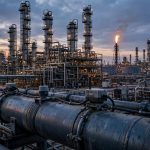
Many of the combustible-gas detectors used in refineries, chemical plants, mines, and confined spaces share the same small sensing element: a catalytic bead sensor, also called a pellistor. It is one of the oldest electronic gas-sensing technologies still in daily use, and it remains the standard way to answer a single urgent question: is there enough flammable gas in this air to be dangerous?
Unlike sensors that identify a specific chemical, a catalytic bead sensor does not care which gas is present. It responds to anything that burns. That simplicity is both its strength and its limitation, and understanding how it works explains why these sensors are calibrated the way they are, why they fail the way they do, and why they are still trusted in life-safety applications after decades of newer alternatives.
What a Catalytic Bead Sensor Actually Is
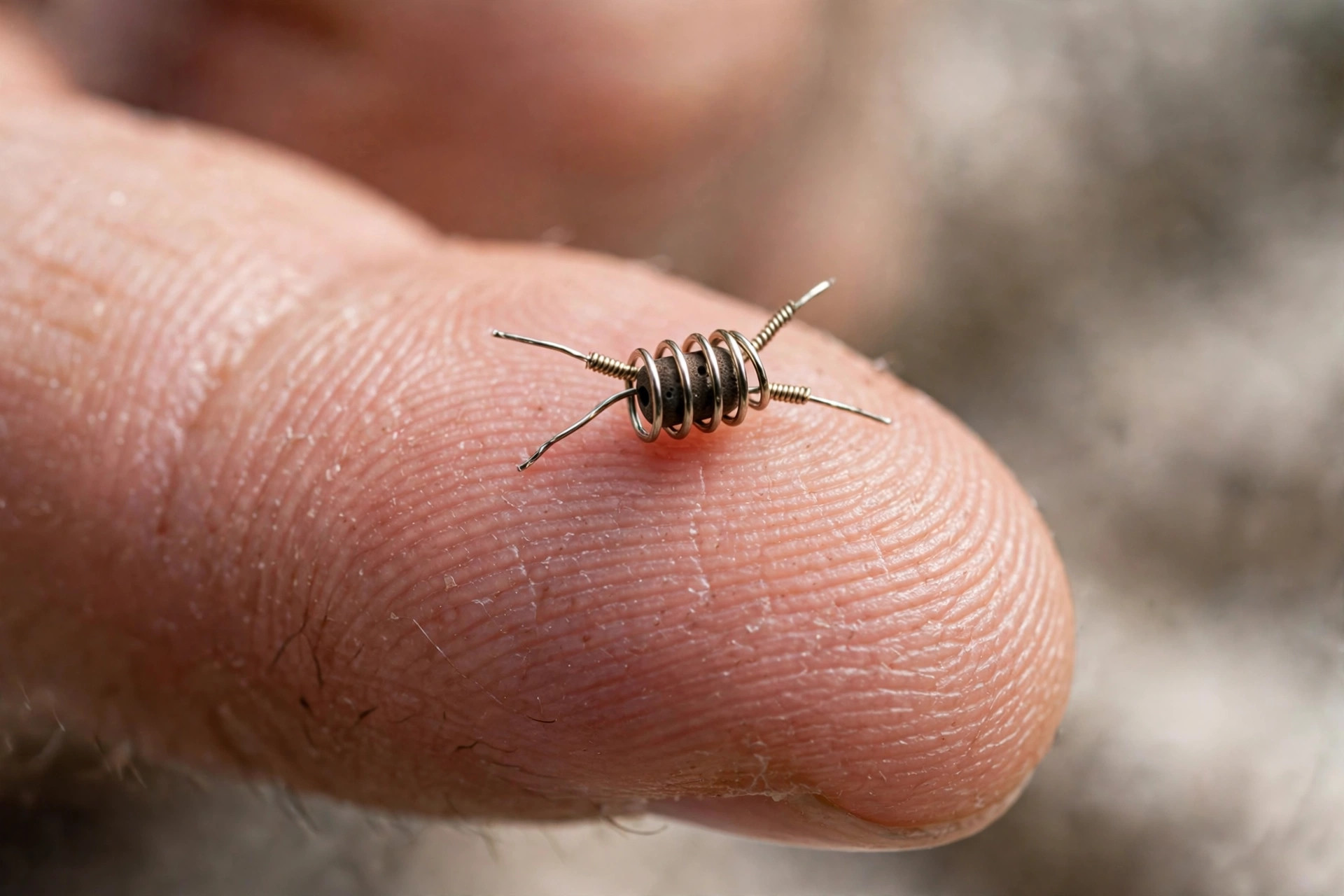
A catalytic bead sensor is built around two tiny coils of platinum wire, each embedded in a small bead of ceramic material about the size of a match head. One bead is the active element: its ceramic is coated with a catalyst, usually a mixture of platinum and palladium, that makes flammable gases oxidize at relatively low temperatures. The other bead is the reference element: it is identical except that its surface is treated to be catalytically inert, so gases pass over it without reacting.
Both beads are heated electrically to roughly 500 °C and wired into opposite arms of a Wheatstone bridge circuit — a classic arrangement that converts a tiny difference between two resistances into a measurable voltage. In clean air, the two beads sit at the same temperature, their resistances match, and the bridge output sits at zero. The reference bead exists so that changes in ambient temperature, humidity, or supply voltage affect both beads equally and cancel out, leaving only the effect of combustible gas in the signal.
The active bead and the reference bead
The pairing is the whole trick. The active bead gets hotter when gas burns on its catalyst; the reference bead does not. Because platinum’s electrical resistance rises predictably with temperature, the active bead’s resistance climbs while the reference bead’s stays put, and the bridge goes out of balance by an amount proportional to the heat released. Engineers chose this differential design because it rejects everything the two beads share — room temperature drift, aging of the wire, small voltage wobbles — and keeps only the difference caused by combustion.
Why the signal reads in %LEL
The output is expressed as a percentage of the lower explosive limit (%LEL): the minimum concentration of a gas in air that can ignite. Methane’s LEL is 5% by volume, so a reading of 20% LEL means the air holds one-fifth of the concentration needed for an explosion. Alarms are typically set at 10% and 20% LEL, well below the danger point. Because different gases release different amounts of heat per molecule and have different LEL values, the sensor is calibrated against one reference gas — usually methane or pentane — and readings for other gases are approximate unless correction factors are applied.
How Catalytic Combustion Creates a Signal, Step by Step
Gas reaches the beads by natural diffusion through a flame-arrestor screen, a sintered metal filter that lets gas molecules in while preventing any flame from escaping outward. This matters because the sensor itself contains a hot surface in a potentially explosive atmosphere; the arrestor is what makes that safe. Once inside, combustible molecules contact the catalyst coating on the active bead and oxidize — they burn without a flame, at a temperature far below their normal ignition point, because the catalyst lowers the energy barrier for the reaction.
The oxidation releases heat directly into the bead. The bead’s temperature rises by a few degrees, its platinum coil’s resistance increases, and the Wheatstone bridge produces a small voltage proportional to that rise. Signal conditioning electronics amplify the voltage, linearize it, and display it as %LEL. The whole chain — diffusion, catalytic oxidation, heating, resistance change, bridge imbalance — takes a few seconds, which is why these sensors respond more slowly than some newer technologies but fast enough for safety monitoring.
Where Catalytic Bead Sensors Are Used
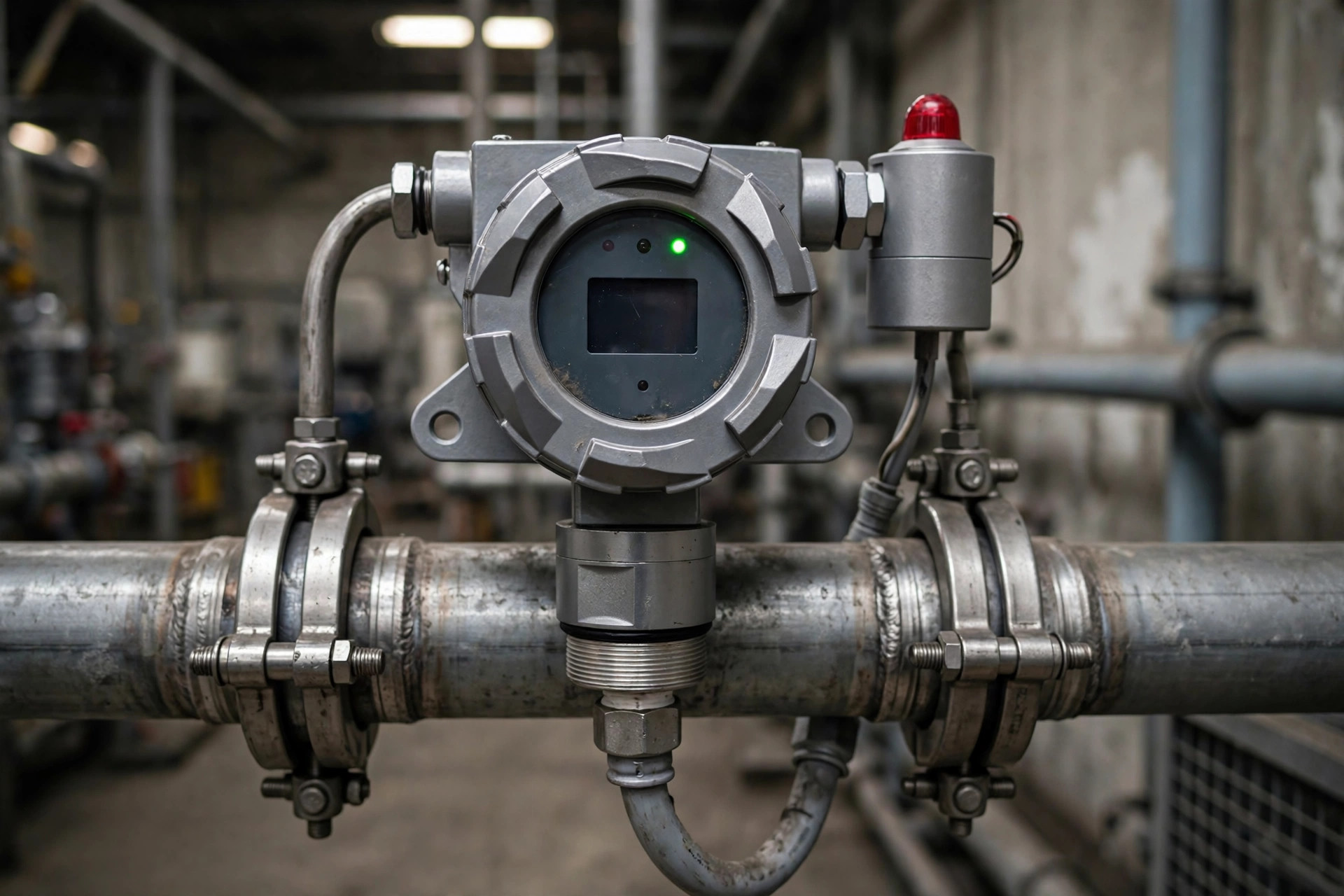
You will find catalytic bead sensors in handheld multi-gas detectors carried into enclosed spaces where gas detection is a matter of life and death: tanks, sewers, manholes, and vessels that must be tested before anyone climbs inside. Fixed-point gas detection heads mounted around process plants use the same element to watch continuously for leaks from pipes, valves, and flanges. They are the default choice wherever the hazard is a flammable gas or vapor — methane, propane, hydrogen, solvents — and where the question is “how close to explosive?” rather than “exactly which chemical and how many parts per million?”
The reason they dominate this role is reliability under a simple contract: as long as the atmosphere contains normal oxygen levels and the catalyst is healthy, the sensor responds to every combustible gas. A plant does not need a different sensor for each of fifty possible hydrocarbons. One calibrated bead covers them all, approximately, which keeps systems affordable and maintainable. That is also why gas sensors that detect leaks in industrial settings are so often pellistor-based: the technology trades chemical specificity for broad, dependable coverage.
What They Can’t Do: Key Limitations
The limitations of catalytic bead sensors are not minor quirks; they define where the technology can and cannot be trusted.
They need oxygen to work
Catalytic oxidation is still combustion, and combustion needs oxygen. In oxygen-deficient atmospheres — inside purged vessels, nitrogen-blanketed tanks, or anywhere inert gas has displaced air — the sensor under-reads or reads zero even when the air is full of fuel. Worse, when oxygen returns, the accumulated gas can ignite. This is why multi-gas instruments pair the catalytic bead with a separate oxygen sensor, and why workers are trained never to trust an LEL reading in a low-oxygen space.
Catalyst poisoning
Certain chemicals permanently deaden the catalyst. Silicones (common in lubricants, sealants, and even some hand creams), lead compounds, and sulfur compounds bind to the platinum-palladium surface and block the reaction sites. A poisoned sensor reads low or not at all — the most dangerous failure mode, because the instrument looks normal while the protection is gone. This is why calibration checks with test gas (“bump tests”) before each use are standard practice, and why sensors exposed to silicones are replaced rather than trusted.
No gas identification, no ppm precision
A catalytic bead cannot tell methane from propane, and it cannot measure trace concentrations in parts per million. It answers one question — how close to flammable — and stays silent on everything else. For toxic-gas monitoring, where the danger threshold sits far below the explosive threshold, a different technology is required. The difference between combustible and toxic gas hazards is exactly the line where pellistors hand off to electrochemical and other sensors.
Calibration and Maintenance Basics
Because the catalyst slowly degrades and the bead characteristics drift, catalytic bead sensors need regular calibration with a certified span gas — typically a known concentration of methane or pentane. A bump test before each shift confirms the sensor still responds; a full calibration adjusts the electronics so the reading matches the known gas concentration. Sensors also have a finite life: two to five years is typical, shorter in harsh or contaminated environments. Storing instruments in clean air, keeping silicone products away from them, and respecting the calibration schedule are what keep a decades-old technology trustworthy.
It is worth noting that occupational safety rules treat this monitoring as mandatory, not optional. OSHA’s confined-spaces standard, for example, requires testing the atmosphere for flammable gases before and during entry into permit spaces — the exact job catalytic bead sensors were designed for (OSHA confined spaces).
How Catalytic Beads Compare to Infrared Gas Sensors
The main modern alternative for combustible-gas detection is the nondispersive infrared (NDIR) sensor, which measures how much infrared light hydrocarbon molecules absorb rather than burning them. Infrared sensors do not need oxygen, are immune to catalyst poisoning, and last longer — so why hasn’t the catalytic bead disappeared? Three reasons: cost, breadth, and hydrogen. Pellistors are far cheaper, they respond to any combustible gas including hydrogen (which infrared sensors struggle with, since hydrogen lacks the carbon-hydrogen bonds infrared detects), and decades of installed safety systems, procedures, and approvals are built around them. In practice, many facilities now use both: infrared for continuously monitored points where poisoning is a risk, and catalytic beads in portable instruments where low cost and broad response matter most. The technologies are complementary, not replacements.
Frequently Asked Questions
What gases can a catalytic bead sensor detect?
Any gas or vapor that burns in air: methane, propane, butane, hydrogen, and most hydrocarbon solvents. It cannot detect non-combustible gases like carbon dioxide or nitrogen, and it is the wrong tool for toxic gases at low concentrations.
Why do readings use %LEL instead of ppm?
Because the safety question is about explosion risk, not absolute concentration. %LEL tells you how close the mixture is to ignitable, which is what determines alarm levels and evacuation decisions.
How long does a catalytic bead sensor last?
Typically two to five years in normal service. Exposure to catalyst poisons like silicones, chronic over-range gas exposure, or mechanical damage can end its life much sooner.
Can it detect carbon monoxide?
Only at very high, near-explosive concentrations. Carbon monoxide is toxic at levels far below its flammable range, so CO monitoring uses electrochemical sensors instead.
Why does silicone damage the sensor?
Silicone compounds decompose on the hot catalyst and deposit silica, which coats the platinum-palladium surface and blocks the reaction sites. The damage is permanent, so the sensor must be replaced.