Environmental sensors are devices designed to continuously monitor and record gradual changes in parameters such as temperature, humidity, atmospheric gases, soil moisture, and light intensity. These sensors operate by detecting physical or chemical variations over time and converting them into measurable signals, enabling the analysis of slow environmental trends that influence ecosystems. Accurate long-term data acquisition depends on sensor calibration, stability, and resistance to drift or environmental interference, which pose challenges to maintaining data reliability. This article examines sensor types, data processing techniques, calibration methods, and factors affecting sensor accuracy to elucidate how gradual environmental changes are effectively tracked.
Why Tracking Slow Environmental Changes Matters
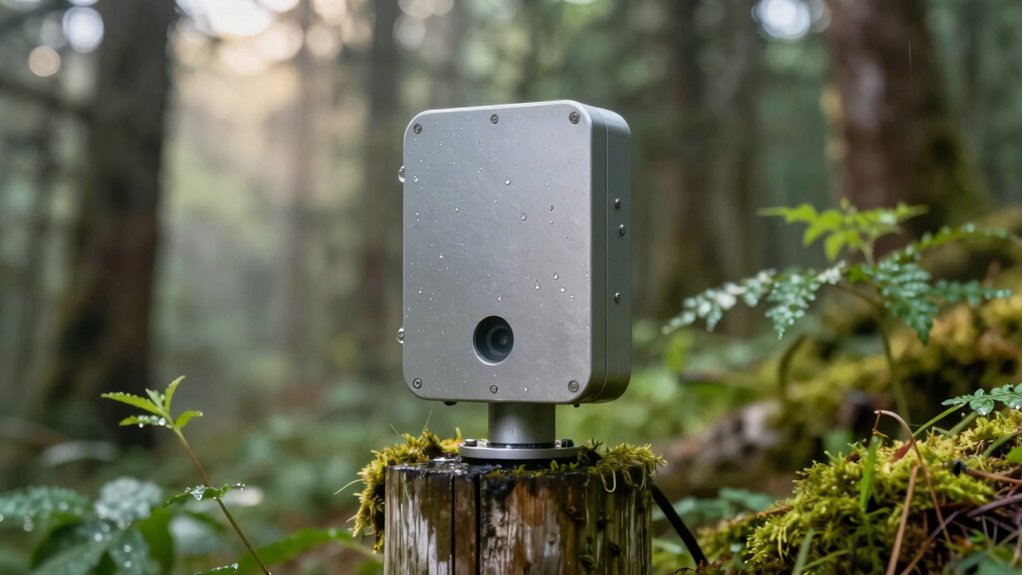
Although slow environmental changes may seem subtle or insignificant at first, tracking them is essential because they often indicate long-term trends that can impact ecosystems, climate patterns, and human health.
You need to recognize that these gradual shifts can accumulate, resulting in significant ecological impact over time. By monitoring slow changes, you can identify early signs of habitat degradation, species displacement, or altered biogeochemical cycles, which might otherwise go unnoticed until irreversible damage occurs.
Gradual environmental shifts accumulate, revealing early warnings of habitat loss and ecological disruption before damage becomes irreversible.
This understanding allows you to evaluate the effectiveness of environmental policies and adapt them proactively. Ignoring these trends risks delayed responses, exacerbating environmental harm and reducing your capacity for intervention.
In addition, informed tracking supports evidence-based policy implications, enabling you to advocate for regulations that balance ecological sustainability with societal freedoms.
Ultimately, your ability to observe and interpret these slow changes empowers you to contribute to preserving natural systems while safeguarding human well-being.
How Sensors Track Slow Environmental Changes
Because slow environmental changes occur over extended periods, sensors designed to track them must prioritize accuracy, sensitivity, and long-term stability. You’ll need to carefully consider sensor placement to capture subtle variations without interference, guaranteeing consistent data quality. Data integration plays an essential role, allowing you to combine measurements from multiple sensors over time for thorough analysis.
| Aspect | Importance |
|---|---|
| Sensor Placement | Minimizes external noise, maximizes relevance |
| Sensitivity | Detects minor environmental shifts |
| Long-term Stability | Provides reliable measurements over months/years |
| Data Integration | Consolidates diverse inputs for trend analysis |
Key Environmental Variables Monitored by Sensors
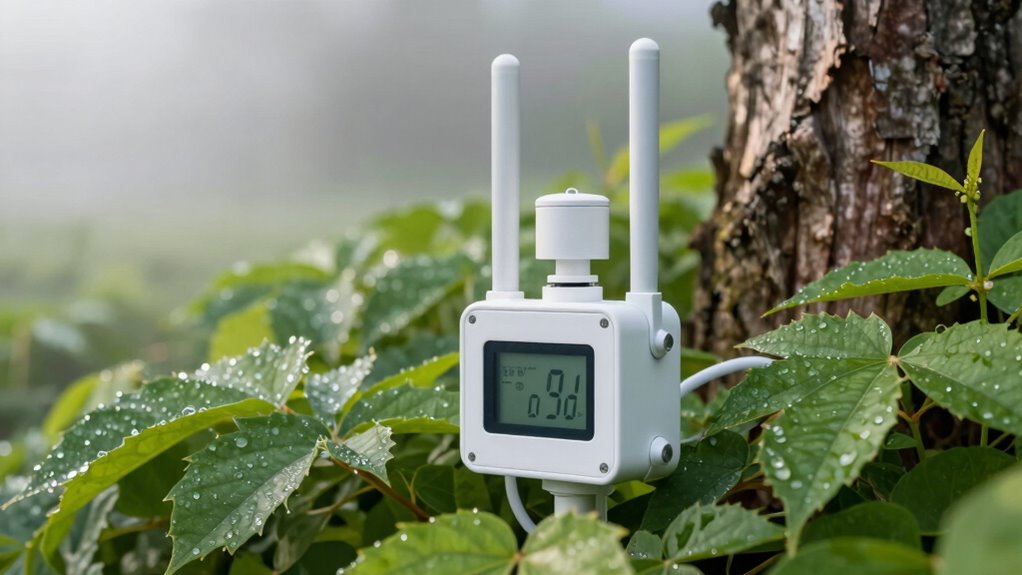
Understanding how sensors track slow environmental changes sets the stage for identifying which specific variables you need to monitor. Key climate variables like temperature, humidity, atmospheric pressure, and carbon dioxide levels are essential for grasping long-term trends. By focusing on these, you guarantee your sensor applications capture meaningful data over time, reflecting gradual shifts rather than short-term fluctuations.
Additionally, variables such as soil moisture, solar radiation, and wind speed contribute valuable context to environmental assessments. Monitoring these variables allows you to detect subtle patterns that influence ecosystems and climate dynamics. Selecting the right variables aligns with your goals for environmental freedom, enabling you to make informed decisions without relying on broad generalizations.
Precision in tracking these climate variables enhances your ability to analyze slow changes objectively, guaranteeing your sensor data remains relevant for research or policy. Ultimately, understanding which environmental factors matter most guides effective sensor applications tailored to long-term monitoring needs.
Types of Sensors for Long-Term Environmental Monitoring
When selecting sensors for long-term environmental monitoring, you need to take into account various technologies, each with different strengths in accuracy and stability.
You’ll also have to evaluate their power consumption and maintenance requirements to guarantee reliable data collection over extended periods.
Balancing these factors is essential for effective and sustainable environmental tracking.
Sensor Technologies Overview
Environmental sensors come in various forms, each designed to capture specific data essential for long-term monitoring. You’ll find sensors measuring temperature, humidity, soil moisture, and atmospheric gases, among others.
These sensor applications are tailored to track subtle environmental shifts over extended periods, providing valuable insights into climate patterns and ecosystem dynamics. Advances in sensor innovations have boosted sensitivity and durability, enabling continuous data collection in harsh conditions without frequent maintenance.
When selecting sensors, consider their compatibility with your monitoring goals and environmental factors. Optical, electrochemical, and mechanical sensors each offer distinct advantages depending on the parameter measured.
Data Accuracy and Stability
Accurate and stable data collection is essential for effective long-term environmental monitoring, and choosing the right sensor types plays an important role in achieving this goal. You’ll want sensors with proven data reliability, minimizing drift and noise over extended periods.
Regular sensor calibration is vital to maintain measurement precision, especially as environmental factors may alter sensor response. Selecting sensors that inherently resist degradation guarantees consistent performance without frequent intervention.
Additionally, you should consider sensors with self-diagnostic features or built-in correction algorithms to further enhance data integrity. By prioritizing these qualities, you empower your monitoring system to deliver trustworthy insights, allowing you the freedom to focus on interpreting trends rather than questioning data quality.
Ultimately, sensor choice directly impacts your ability to detect subtle, slow environmental changes with confidence.
Power and Maintenance Needs
Since long-term monitoring often occurs in remote or inaccessible locations, understanding the power and maintenance requirements of sensors is critical to ensuring uninterrupted data collection. You’ll want to prioritize power efficiency to extend operational periods and adopt maintenance strategies that minimize human intervention. Solar-powered sensors with low energy consumption are ideal for freedom in deployment, reducing dependency on frequent battery changes.
| Sensor Type | Power Efficiency | Maintenance Strategies |
|---|---|---|
| Electrochemical | Moderate | Periodic calibration, battery check |
| Optical | High | Minimal, lens cleaning |
| Ultrasonic | Low | Regular battery replacement |
Choosing sensors with optimal performance and maintenance profiles lets you maintain consistent monitoring without frequent site visits or power disruptions.
How Data Loggers Improve Sensor Monitoring
A data logger plays a crucial role in enhancing sensor monitoring by automatically recording measurements over time, allowing you to collect continuous, reliable data without manual intervention. This technology offers numerous data logger benefits that contribute to enhanced monitoring of slow environmental changes.
By integrating data loggers with sensors, you gain the freedom to observe long-term trends without constant oversight.
Consider these key advantages:
- Automated data capture reduces human error.
- High storage capacity preserves extensive datasets.
- Time-stamped records guarantee precise temporal analysis.
- Portability enables deployment in remote locations.
- Compatibility with multiple sensor types broadens application scope.
These features collectively improve your ability to monitor environments accurately and independently.
Data loggers facilitate objective, uninterrupted data collection, empowering you to make informed decisions based on thorough environmental insights. Essentially, they transform raw sensor readings into actionable information, optimizing your monitoring strategy.
Setting Up Sensor Networks for Continuous Data Collection
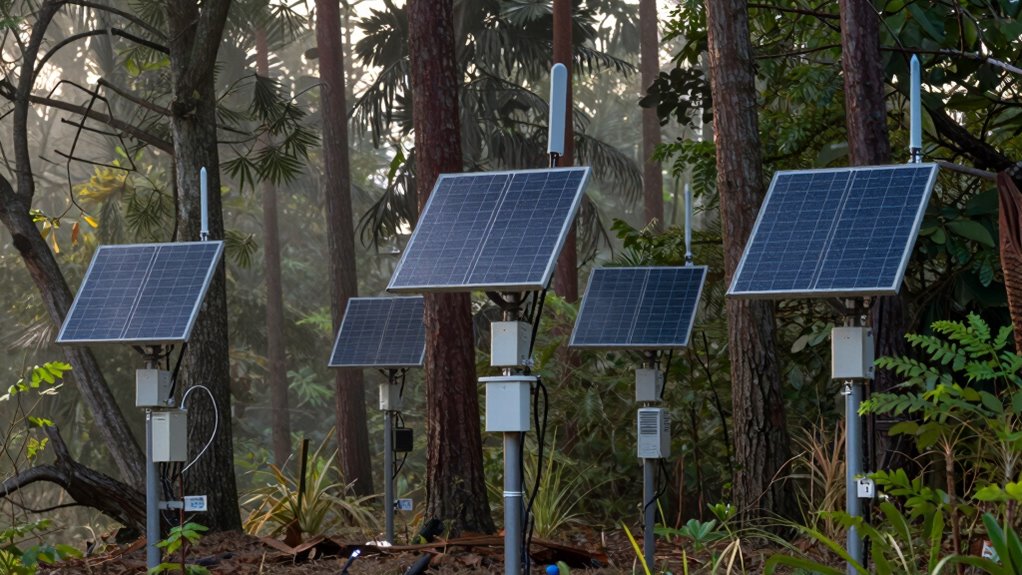
When you set up sensor networks for continuous data collection, careful planning secures reliable communication and data integrity across all devices. You’ll need to evaluate sensor deployment strategies carefully, balancing coverage and accessibility while minimizing environmental impact.
Choosing the right sensor placement guarantees consistent data flow and reduces maintenance needs. Network configuration challenges often arise from varying terrain and connectivity limits, requiring adaptive solutions like mesh networks or repeaters to maintain stable links.
You must also consider power management, as uninterrupted operation depends on efficient energy use or renewable sources. Data synchronization protocols are critical to avoid gaps or overlaps in time-series data, preserving accuracy over long periods.
Common Challenges in Tracking Slow Environmental Changes
Establishing a well-designed sensor network sets the stage, but tracking slow environmental changes presents unique obstacles that demand careful attention. You’ll face challenges like data variability, where natural fluctuations can mask subtle trends.
Sensor drift is another critical issue, causing gradual measurement shifts that can distort long-term records. Environmental factors and hardware limitations contribute further complexity. Consider these hurdles:
- Gradual sensor degradation affecting accuracy
- Interference from external environmental conditions
- Data gaps due to power or communication failures
- Distinguishing real changes from noise in datasets
- Maintaining sensor consistency over extended periods
To navigate these, you must rigorously assess data quality and apply robust analytical methods.
How Sensor Calibration Ensures Reliable Long-Term Data
To maintain reliable long-term environmental data, you need to calibrate sensors regularly based on their specific frequency requirements.
Employing precise calibration techniques, such as reference standards or automated adjustments, directly influences the accuracy of the measurements you collect.
Understanding how these calibration practices impact data quality is essential for tracking subtle environmental shifts over time.
Calibration Frequency Importance
Although sensors are designed for accuracy, their performance can drift over time due to environmental factors and component wear, making regular calibration vital.
You need to schedule calibration based on how frequently sensor readings might deviate. Adhering to calibration standards guarantees consistency, while selecting appropriate calibration techniques maintains data integrity.
Consider these factors when determining calibration frequency:
- Environmental conditions causing sensor degradation
- Sensor usage intensity and operational hours
- Manufacturer’s recommended calibration intervals
- Criticality of data accuracy for your application
- Historical drift rates observed in sensor performance
Techniques For Sensor Calibration
While sensor calibration techniques vary depending on the device and application, they all aim to maintain data accuracy and consistency over time.
You’ll encounter methods like single-point and multi-point calibration, each designed to adjust sensor outputs against known reference standards. Single-point calibration sets a baseline, ideal for stable environments, while multi-point calibration addresses nonlinear sensor responses, enhancing sensor accuracy across ranges.
Additionally, you might use in-situ calibration, which adjusts sensors in their operational environment, reducing discrepancies caused by external factors.
Automated calibration systems can periodically recalibrate sensors without manual intervention, preserving data integrity during long-term monitoring.
Impact On Data Accuracy
Because sensor readings can drift over time due to environmental factors or component aging, regular calibration is vital to maintain data accuracy.
Without addressing sensor drift, the data integrity of your environmental monitoring system deteriorates, leading to unreliable conclusions.
By calibrating sensors, you guarantee that changes detected reflect true environmental shifts rather than device errors.
Calibration helps you:
- Correct baseline shifts caused by sensor aging
- Minimize measurement noise and bias
- Identify and compensate for environmental interferences
- Maintain consistency across multiple sensor units
- Extend sensor lifespan while preserving data quality
This systematic approach safeguards your freedom to trust long-term environmental data, enabling confident decision-making based on precise, reliable sensor outputs.
Combining Remote Sensing With Ground-Based Sensors
When you combine remote sensing with ground-based sensors, you gain a more thorough understanding of environmental changes by integrating large-scale data with localized measurements. This approach leverages sensor fusion to enhance data integration, allowing you to interpret complex environmental patterns with greater accuracy. Remote sensing offers spatially extensive data, while ground sensors provide precise, continuous readings. Together, they compensate for each other’s limitations, creating a complete monitoring system.
| Aspect | Remote Sensing | Ground-Based Sensors |
|---|---|---|
| Coverage | Large-scale, regional | Localized, specific points |
| Data Frequency | Periodic, satellite passes | Continuous, real-time |
| Data Type | Imagery, spectral data | Temperature, humidity, etc. |
How IoT Is Changing Environmental Monitoring
You’re likely aware that IoT enables real-time data collection by connecting numerous remote sensors across diverse environments.
This networked approach enhances the accuracy and timeliness of environmental monitoring, allowing for immediate response to changes.
Understanding how these sensor networks operate helps clarify the transformative impact IoT has on tracking environmental dynamics.
Real-Time Data Collection
Although traditional environmental monitoring methods have provided valuable data, the integration of IoT technology has revolutionized real-time data collection by enabling continuous, automated, and remote sensing.
You benefit from enhanced sensor integration that allows diverse data streams to be consolidated efficiently. Real time analytics process these streams instantly, offering immediate insights into environmental changes. This capability empowers you to respond quickly and make informed decisions without delay.
Imagine monitoring:
- Air and water quality fluctuations minute-by-minute
- Soil moisture levels adapting during drought
- Wildlife activity patterns in near real time
- Instant detection of hazardous chemical leaks
- Temperature variations across microclimates
Such dynamic data collection liberates you from static, outdated reports, granting freedom to act precisely when conditions shift.
Remote Sensor Networks
Since environmental conditions can change rapidly across vast areas, remote sensor networks have become essential for extensive monitoring. By deploying numerous interconnected devices, you gain extensive coverage that traditional methods can’t match.
Remote sensing technology enables these sensors to detect subtle environmental shifts over time, providing continuous, high-resolution data. The real power lies in data integration—combining inputs from diverse sensors lets you analyze complex patterns with greater accuracy.
This approach enhances your ability to track slow, cumulative changes while maintaining spatial and temporal detail. With IoT-driven remote sensor networks, you’re no longer limited by location or scale, giving you the freedom to observe ecosystems dynamically and respond proactively.
Ultimately, this system empowers informed decision-making in environmental management and conservation efforts.
Techniques for Analyzing Sensor Data to Detect Slow Trends
When you’re working with sensor data to detect slow environmental trends, it’s vital to apply techniques that can distinguish subtle, long-term changes from short-term fluctuations and noise.
You’ll want to leverage data visualization to spot patterns that aren’t immediately obvious, using graphs and heatmaps to reveal gradual shifts. Statistical analysis plays a key role by quantifying trends, testing significance, and filtering out random variability.
Consider these essential methods:
- Time series smoothing to reduce noise and highlight underlying trends
- Moving averages and rolling windows for dynamic trend detection
- Regression analysis to model relationships over time
- Anomaly detection algorithms to identify deviations from expected patterns
- Principal component analysis (PCA) to simplify complex sensor datasets
Using Sensor Data to Detect Subtle Climate Shifts
You need to focus on long-term data collection to identify subtle climate shifts that aren’t obvious in short-term observations.
By analyzing trends in sensor data over extended periods, you can detect gradual changes in temperature, humidity, and other environmental factors.
This approach requires consistent monitoring and advanced statistical methods to distinguish real shifts from natural variability.
Long-Term Data Collection
Although subtle climate shifts can be difficult to detect in the short term, long-term data collection through sensors provides a reliable method for identifying these changes.
By continuously monitoring environmental variables, you can observe long term trends that reveal shifts invisible in brief snapshots. This data helps quantify environmental impact with precision, supporting freedom in decision-making based on solid evidence.
Imagine sensors capturing:
- Gradual temperature increases over decades
- Incremental soil moisture variations
- Slowly rising sea levels
- Progressive changes in air quality
- Shifts in local biodiversity indicators
Collecting such data empowers you to understand the environment’s evolving state, ensuring your actions respect and respond to these subtle but critical climate dynamics.
Long-term sensor data is a cornerstone for informed, autonomous environmental stewardship.
Analyzing Sensor Trends
Since raw sensor data often contains noise and variability, analyzing trends requires careful statistical techniques to distinguish meaningful climate signals from short-term fluctuations.
You’ll want to assess sensor performance continuously to guarantee data accuracy and reliability over time, accounting for any drift or calibration issues.
Applying advanced filtering methods helps isolate subtle shifts indicative of environmental change.
Data visualization plays a vital role here, enabling you to detect patterns and anomalies that raw numbers might obscure.
By plotting long-term datasets with trend lines and confidence intervals, you can interpret gradual climate shifts more effectively.
This approach empowers you to make informed decisions based on robust evidence, allowing freedom to explore complex environmental dynamics without being misled by transient data irregularities.
Monitoring Soil Health With Moisture and Nutrient Sensors
When evaluating soil health, moisture and nutrient sensors provide critical data that helps you understand the dynamic conditions affecting plant growth.
These sensors measure soil moisture and nutrient levels, enabling you to make informed decisions about irrigation and fertilization. By tracking gradual changes, you gain insight into soil fertility and water retention capacity over time.
Using these sensors, you can visualize:
- Fluctuations in soil moisture after rainfall or irrigation
- Variations in nutrient levels due to crop uptake or decomposition
- Zones of soil compaction that reduce water absorption
- Seasonal shifts affecting nutrient availability
- Long-term trends indicating soil degradation or improvement
This detailed, real-time data empowers you to optimize resource use without guesswork, fostering sustainable soil management.
You maintain freedom to adapt practices responsively, ensuring the soil remains a productive foundation for growth while minimizing environmental impact.
Tracking Air Quality Changes Using Particulate and Gas Sensors
By deploying particulate and gas sensors, you can obtain precise, continuous measurements of air quality that reveal both immediate pollution events and long-term trends.
These sensors detect airborne pollutants such as particulate matter (PM2.5, PM10) and gases like nitrogen dioxide or ozone, which are critical indicators of environmental health. The sensor sensitivity determines your ability to discern subtle changes in pollutant concentrations, making it essential for tracking slow shifts in air quality over time.
High sensitivity sensors allow you to capture fluctuations that might otherwise go unnoticed, supporting informed decisions about public health and regulatory measures. Furthermore, continuous data collection helps you identify patterns linked to seasonal variations or urban development.
Case Studies: Sensors Tracking Slow Environmental Shifts
Although slow environmental shifts can be challenging to detect, sensor technology provides a powerful tool for revealing gradual changes over extended periods. By strategic sensor deployment, you can gather precise, continuous data that capture subtle trends often missed by occasional sampling.
Case studies demonstrate how long-term monitoring paired with advanced data visualization uncovers patterns essential for understanding ecosystems.
Consider these examples of sensor applications tracking slow shifts:
- Coastal erosion monitored via ground and aerial sensors detecting shoreline retreat
- Soil moisture sensors revealing gradual desertification trends
- Glacier mass balance measured by embedded temperature and pressure sensors
- Forest health assessed through multi-spectral sensors tracking canopy changes
- Urban heat islands mapped using distributed temperature sensors
Each case uses data visualization to translate raw sensor inputs into actionable insights, empowering you to make informed decisions about environmental management and policy, all while maintaining the freedom to adapt your monitoring strategies over time.
Future Sensor Technologies for Long-Term Monitoring
The examples of sensor applications tracking slow environmental shifts highlight how current technologies capture valuable data over time.
Looking ahead, future sensor advancements will emphasize enhanced durability, energy efficiency, and miniaturization to support long-term environmental monitoring with minimal maintenance.
You’ll see sensors increasingly designed to operate autonomously in remote areas, powered by renewable energy sources like solar or kinetic energy.
Additionally, sensor integration strategies will become more sophisticated, combining data from multiple sensor types to improve accuracy and contextual understanding.
By leveraging machine learning and edge computing, these integrated systems will process data locally, reducing latency and transmission demands.
This approach not only preserves data integrity but also enables real-time analysis critical for detecting subtle, gradual changes.
As you adopt or develop future sensor technologies, prioritizing interoperability and scalable integration will give you the freedom to tailor monitoring systems to diverse environments and evolving research needs, ensuring long-term reliability and actionable insights.
Frequently Asked Questions
How Do Sensors Handle Power Supply in Remote Locations?
You’ll rely on solar power combined with high battery efficiency to sustain sensors in remote spots. This setup guarantees continuous operation, minimizes maintenance, and grants you freedom from frequent power replacements or wired connections.
What Maintenance Is Required for Long-Term Sensor Deployments?
You’ll need regular sensor calibration to maintain accuracy and guarantee data integrity. Periodic checks, cleaning, and firmware updates are essential, allowing your deployment to operate freely without compromising long-term reliability or the quality of environmental data collected.
Can Sensor Data Be Accessed in Real-Time by the Public?
Like Prometheus sharing fire, you can often access sensor data with real time accessibility, promoting public transparency. This freedom lets you analyze environmental shifts immediately, ensuring open, detailed insights without delay or gatekeeping by authorities or intermediaries.
How Do Environmental Regulations Impact Sensor Deployment?
Environmental regulations shape sensor deployment by enforcing regulatory compliance, ensuring environmental monitoring meets standards. You’ll find these rules guide sensor types, placement, and data usage, balancing freedom with accountability to protect ecosystems effectively over time.
What Are the Costs Associated With Setting up Sensor Networks?
Think of sensor installation costs as planting seeds—initially steep but essential. You’ll face network scalability challenges, balancing expansion with budget limits. Understanding these helps you optimize freedom in monitoring while managing expenses strategically.