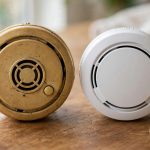
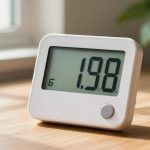
Environmental sensors measure parameters such as temperature, humidity, air quality, and atmospheric pressure by translating physical stimuli into electrical signals. Their accuracy depends on factors including sensor calibration, environmental conditions like temperature fluctuations, sensor aging, and electromagnetic interference, which can cause measurement deviations. This article examines how these variables affect sensor reliability and explores methods for evaluating sensor performance under practical operating conditions. Key topics include calibration techniques, environmental stress impacts, sensor drift, and validation protocols.
How Is Environmental Sensor Accuracy Measured?
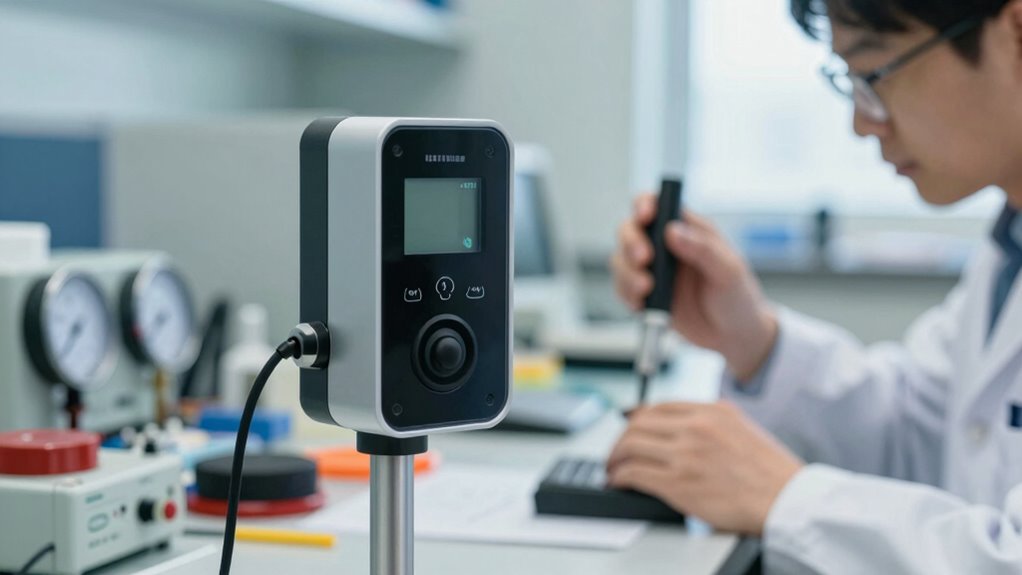
How do you determine if an environmental sensor is providing accurate data?
You start by examining its sensor specifications, which detail the expected performance parameters. Accuracy is typically quantified by comparing sensor output to a recognized reference or standard.
These accuracy standards are established through rigorous calibration procedures and documented in technical datasheets. Manufacturers often specify accuracy as a percentage of full-scale reading or as an absolute error margin, such as ±2% or ±0.1 units.
To assess compliance, you must analyze the sensor’s response under controlled conditions against traceable calibration references. This process reveals if the sensor consistently meets its declared accuracy.
Understanding these metrics empowers you to select devices that align with your requirements for reliable environmental monitoring. By relying on objective accuracy standards and verifiable sensor specifications, you guarantee the data you obtain is trustworthy, enabling you to maintain freedom in decision-making without being constrained by uncertain measurements.
What Affects Sensor Accuracy Outdoors?
You’ll find that environmental conditions like temperature, humidity, and particulate matter directly influence sensor accuracy outdoors.
Calibration becomes more complex due to fluctuating conditions and sensor aging.
Additionally, external interference from electromagnetic sources or nearby equipment can distort the sensor’s readings.
Environmental Conditions Impact
Although environmental sensors are designed for outdoor use, their accuracy can be greatly influenced by varying environmental conditions. When you deploy sensors in the field, temperature fluctuations directly impact their readings, as many sensor components exhibit sensitivity to thermal changes, causing signal drift or bias.
Similarly, humidity levels play a vital role; excessive moisture can lead to condensation on sensor surfaces, altering electrical properties and introducing measurement errors. You must also consider rapid shifts in these conditions, which can induce transient inaccuracies before the sensor stabilizes.
Understanding these environmental impacts is essential if you want reliable data, as uncorrected influences compromise sensor precision and your control over measurement quality. By accounting for temperature and humidity effects, you maintain the freedom to trust your sensor outputs in fluctuating outdoor environments.
Sensor Calibration Challenges
Environmental factors like temperature and humidity don’t just affect sensor readings—they also complicate the calibration process. You must account for sensor drift caused by prolonged exposure to varying outdoor conditions. Calibration frequency becomes critical; too infrequent, and accuracy degrades, too frequent, and operational freedom is hindered. Balancing this requires understanding how each factor impacts sensor performance.
| Factor | Impact on Calibration | Mitigation Strategy |
|---|---|---|
| Temperature | Alters sensor baseline | Temperature compensation |
| Humidity | Affects sensor sensitivity | Regular recalibration |
| Sensor Drift | Gradual deviation over time | Scheduled calibration |
| Exposure Time | Accelerates drift | Minimize continuous exposure |
| Calibration Frequency | Determines accuracy level | Optimize interval based on environment |
You’ll need to tailor calibration cycles to your specific conditions to maintain reliable sensor data outdoors.
Interference From External Sources
When sensors operate outdoors, various external sources can introduce interference that compromises their accuracy. You’ll encounter sensor noise generated by fluctuating environmental conditions like temperature changes, humidity, and electromagnetic fields. These factors inject unwanted variations into sensor readings, reducing data reliability.
Additionally, signal interference from nearby electronic devices, radio transmissions, or power lines can distort sensor outputs, making it harder to discern true measurements. To maintain freedom in your data collection, you need to mitigate these influences through shielding, filtering techniques, and strategic sensor placement.
Understanding the sources of sensor noise and signal interference empowers you to optimize sensor performance and preserve the integrity of your environmental measurements, ensuring the data you rely on remains as accurate and actionable as possible under real-world outdoor conditions.
How Does Calibration Impact Sensor Reliability?
Since sensor accuracy can drift over time due to factors like aging components and environmental exposure, calibration plays an essential role in maintaining reliable measurements.
You need to understand that sensor drift—gradual deviation from true values—undermines data integrity if left uncorrected. Regular calibration resets the sensor’s baseline, aligning its output with known standards.
Sensor drift gradually skews data; regular calibration realigns sensors to maintain accurate, trustworthy measurements.
How often you calibrate, the calibration frequency, directly affects sensor reliability; too infrequent, and errors accumulate, too frequent, and operational costs rise unnecessarily. For freedom in deployment, you must balance calibration frequency based on environmental conditions and sensor type.
Precise calibration protocols mitigate drift impacts, ensuring consistent performance. Without this disciplined approach, your sensor readings become suspect, limiting your ability to act confidently on environmental data.
Fundamentally, rigorous, well-timed calibration is your key to revealing dependable sensor data, empowering you to monitor conditions accurately and maintain autonomy over your environmental assessments.
Which Environmental Sensors Are Best for Air and Water?
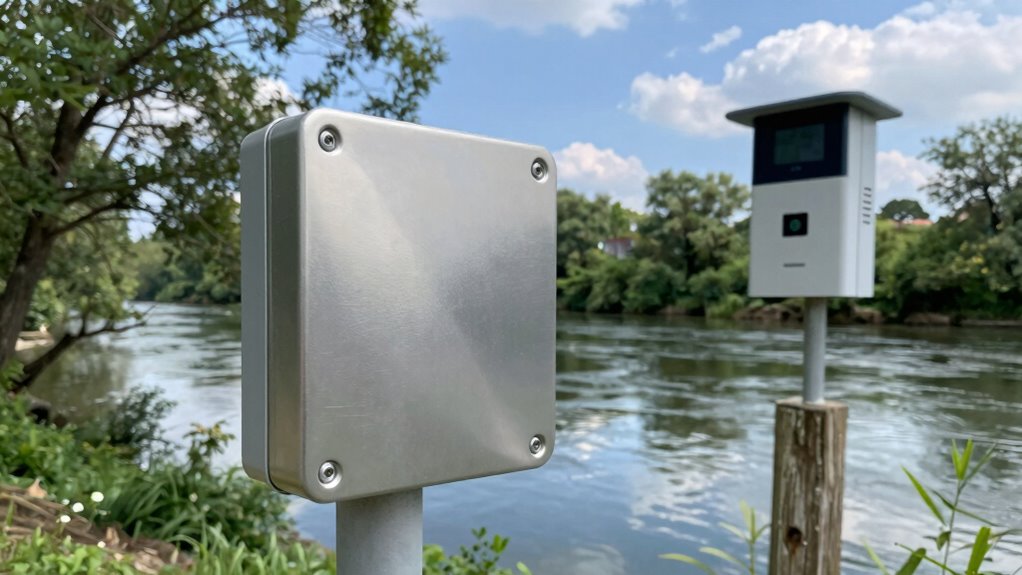
Choosing the right sensors for monitoring air and water quality requires careful consideration of the specific parameters you need to measure, the expected environmental conditions, and the required accuracy.
For evaluating air quality, electrochemical sensors excel in detecting gases like CO, NO2, and O3 with high sensitivity, while optical particulate matter sensors provide precise measurements of PM2.5 and PM10 concentrations.
When assessing water purity, ion-selective electrodes offer targeted analysis of ions such as nitrate and chloride, whereas optical sensors effectively detect turbidity and dissolved organic compounds.
You’ll want to prioritize sensors with proven calibration stability and minimal drift to maintain data integrity over time. Additionally, selecting sensors with real-time data output and wireless capabilities can enhance your freedom to monitor remotely and adapt your setup as conditions change.
Ultimately, the best choice balances accuracy, durability, and adaptability, empowering you to obtain reliable, actionable insights into air quality and water purity.
How Do Environmental Conditions Cause Sensor Errors?
Although environmental sensors are designed for accuracy, varying conditions such as temperature fluctuations, humidity levels, and airborne contaminants can introduce measurement errors.
You’ll find that temperature fluctuations directly affect sensor components, causing shifts in output signals—a phenomenon known as sensor drift. This drift gradually degrades accuracy, requiring regular recalibration to maintain reliability.
Humidity can alter sensor response by affecting the material properties of sensing elements, leading to inconsistent readings. Airborne contaminants may deposit on sensor surfaces, obstructing proper detection and skewing data.
Humidity and airborne contaminants can disrupt sensor accuracy by altering materials and blocking detection surfaces.
These environmental factors don’t just influence immediate measurements; they compound over time, challenging your ability to trust sensor outputs without ongoing maintenance.
Understanding how these variables interplay helps you anticipate inaccuracies and implement strategies to mitigate them, preserving your sensor’s integrity and your freedom to rely on precise environmental data.
Common Mistakes That Cause Sensor Inaccuracy
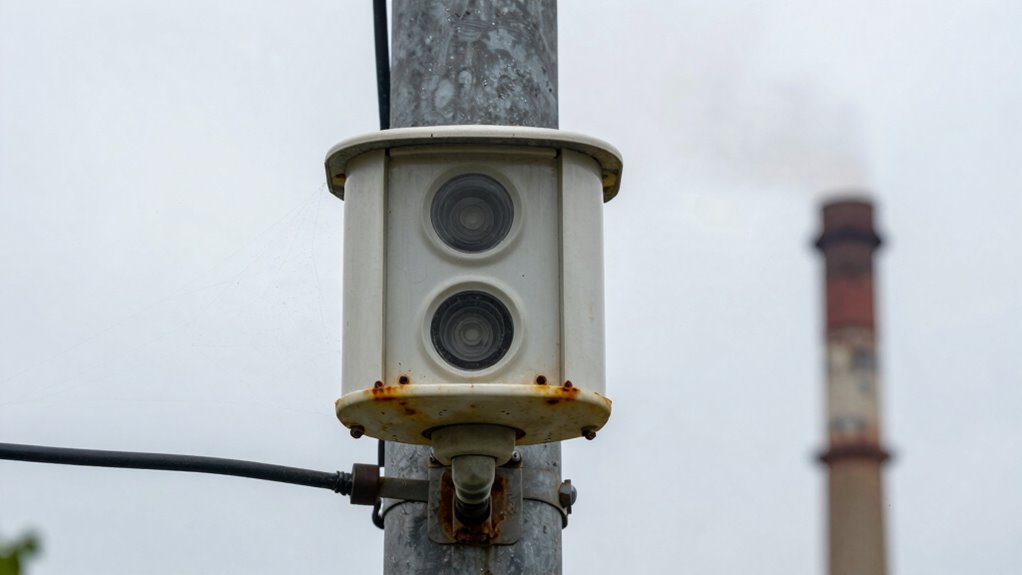
When you rely on environmental sensors, even small mistakes can greatly degrade their accuracy. One common error is improper sensor placement; positioning sensors near heat sources, reflective surfaces, or in stagnant air zones skews readings, limiting your ability to obtain true environmental data.
Additionally, neglecting regular maintenance routines allows dust, moisture, and corrosion to accumulate on sensor elements, causing drift and response lag. Skipping calibration checks or using outdated calibration data also introduces systematic errors that reduce reliability.
Wiring issues, such as loose connections or electromagnetic interference, further compromise signal integrity. To maintain your freedom in data accuracy, you must avoid these pitfalls by carefully selecting sensor locations with unobstructed airflow and minimal environmental interference, and by implementing consistent, documented maintenance protocols.
Recognizing these typical mistakes empowers you to uphold sensor performance and trust the measurements that inform your decisions.
How to Verify and Improve Your Sensor’s Accuracy
To verify your sensor’s accuracy, you need to apply rigorous calibration techniques using traceable standards.
Implementing systematic data validation methods helps identify anomalies and guarantees reliable measurements.
These steps are essential to maintain and enhance your sensor’s performance over time.
Calibration Techniques
Since environmental sensors can drift over time due to factors like temperature changes and component aging, regular calibration is crucial to maintain their accuracy.
You need to establish an appropriate calibration frequency based on sensor type, application criticality, and environmental conditions. Relying on recognized calibration standards guarantees consistency and traceability to national or international benchmarks.
Calibration typically involves comparing your sensor’s output against a known reference under controlled conditions, then adjusting or documenting deviations.
Automated calibration systems can reduce human error, but manual verification remains valuable for complex measurements.
Data Validation Methods
Regular calibration sets the foundation for sensor accuracy, but validating the data you collect guarantees that your sensors perform reliably in real-world conditions.
To verify and improve your sensor’s accuracy, focus on robust validation techniques that compare sensor outputs against trusted data sources. Consider these key methods:
- Cross-reference sensor data with established benchmarks or reference instruments.
- Implement statistical outlier detection to identify anomalies in your dataset.
- Use temporal validation by comparing data trends over time to detect drift.
- Employ spatial validation by correlating data from multiple sensors in the same environment.
When Should You Trust Environmental Sensor Readings?
How can you determine when environmental sensor readings are reliable enough to inform vital decisions? You start by evaluating sensor trustworthiness through calibration data, manufacturer specifications, and independent validation studies.
Consistent alignment with benchmark or reference-grade instruments strengthens reading reliability. Additionally, real-time data should be cross-checked with historical trends and corroborated by multiple sensors within the same environment to identify anomalies or drift.
Environmental factors like temperature, humidity, and electromagnetic interference can impact sensor output, so understanding operating conditions is essential. You should also consider the sensor’s maintenance history; regular recalibration and fault checks are critical for sustained accuracy.
Ultimately, you trust readings when they fulfill predefined accuracy thresholds relevant to your application, supported by transparent data quality metrics. By rigorously evaluating these parameters, you maintain freedom to act confidently on sensor data, minimizing risks associated with erroneous environmental measurements.
Environmental monitors worth buying
Want to track the slow environmental changes this article describes? These stations and monitors log exactly those signals at home.
- Measures wind, rain, temp, humidity and pressure
- WiFi uploads to phone app and weather networks
- Solar-powered outdoor sensor array
- Real-time CO2 readout with temp and humidity
- Alerts when air quality drops
- Mains or battery operation for any room
Disclosure: as an Amazon Associate, awasc.com earns from qualifying purchases.
Frequently Asked Questions
How Often Should Environmental Sensors Be Replaced?
You should follow the manufacturer’s guidelines on replacement frequency, typically every 1–3 years, depending on sensor lifespan and environmental conditions. Regular calibration guarantees accuracy, but timely replacement is essential to maintain reliable sensor performance and freedom in data integrity.
Are Low-Cost Environmental Sensors Reliable for Home Use?
Low-cost environmental sensors can be reliable for home use if you regularly perform sensor calibration to maintain accuracy. Their cost effectiveness offers freedom, but be mindful of potential trade-offs in precision and sensor lifespan.
Can Environmental Sensors Detect All Types of Air Pollutants?
You can’t expect environmental sensors to detect all pollutant types perfectly; their detection capabilities vary by technology and target compounds. Understanding these limits empowers you to choose sensors that best suit your specific air quality needs.
Do Environmental Sensors Require Special Storage Conditions?
Yes, you’ll need to follow specific sensor calibration techniques and storage temperature guidelines to maintain accuracy. Proper storage prevents sensor drift and degradation, ensuring reliable data collection while allowing you the freedom to deploy sensors confidently in varied environments.
How Do Wireless Environmental Sensors Transmit Data Securely?
Wireless environmental sensors transmit data securely by applying robust data encryption protocols and maintaining signal integrity through error-checking algorithms. This guarantees your transmitted information remains confidential, unaltered, and resistant to unauthorized access or interference.