That smoke detector on your ceiling has a birthday, and it is quietly counting down. Unlike a light bulb that fails obviously, a smoke detector ages invisibly — its sensor grows less sensitive year by year while the test button keeps chirping reassuringly. The result is a device that looks alive but may no longer detect a fire in time.
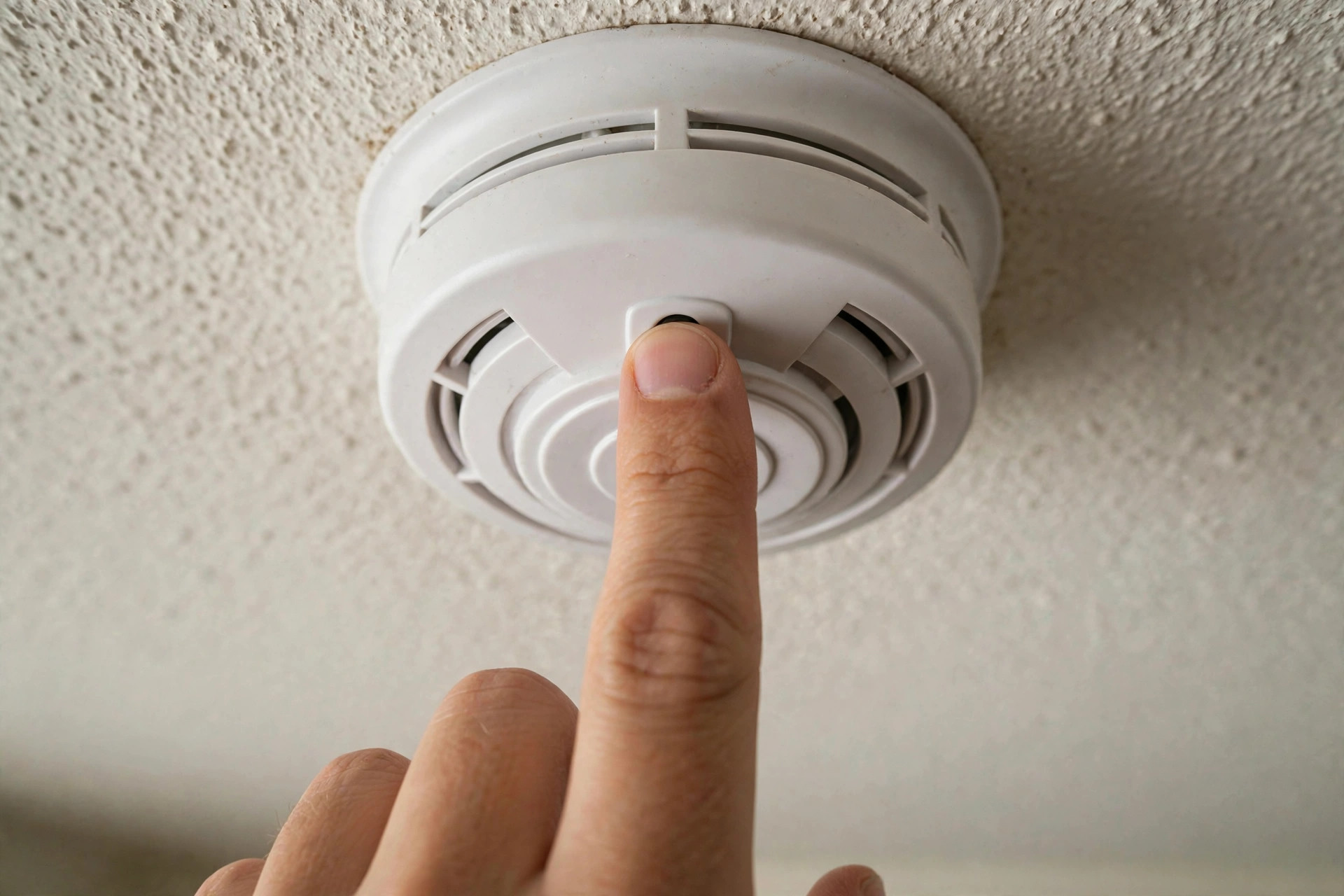
Most homeowners are surprised to learn that the familiar test button tells them almost nothing about the part that matters. Pressing it proves the battery, the circuit board, and the horn all work — but the sensing chamber, the component that must recognize smoke in a dark, dusty hallway at 3 a.m., is never tested by that button. Only time tests the chamber, because its enemies are slow: dust films, dimming LEDs, drying capacitors, and drifting electronics.
This article explains why smoke detectors expire, what actually degrades inside them, how to find your unit’s age and replacement date, and the replacement schedule fire professionals recommend — so the alarm you trust is one that can still do its job.
Why Smoke Detectors Have a Shelf Life
A smoke detector is a precision instrument that spends a decade breathing your home’s air — cooking grease, dust, humidity, insects, temperature swings. Every one of those leaves a mark on the sensing chamber, and the damage is cumulative and irreversible.
In ionization detectors, the tiny amount of americium-241 that ionizes the air slowly decays (its half-life is 432 years, so radioactivity is not the issue), but dust and grime coating the chamber plates matter far more: contamination changes the chamber’s electrical characteristics and dulls its response to smoke particles. In photoelectric detectors, the light-sensing chamber suffers a different fate — dust films the LED and the photocell, scattering and absorbing light, while the LED itself gradually dims with age. Optical contamination is the number-one killer of photoelectric sensitivity.
Electronics age too. Capacitors dry out, solder joints fatigue through thousands of thermal cycles, and the horn’s piezo element weakens. Any one of these degrades gracefully rather than failing outright, which is precisely the danger: the detector does not die, it fades.
The 10-Year Rule — and Why It Exists
The National Fire Protection Association recommends replacing smoke alarms every 10 years from the date of manufacture, and most manufacturers print an explicit replacement date on the unit. This is not a sales tactic. It reflects measured data: after about a decade, the probability that a detector responds within its designed time window drops enough that fire researchers consider it unreliable.
Note the wording: 10 years from manufacture, not from installation. A detector that sat in a warehouse or on a store shelf for two years has already burned 20 percent of its service life. Always check the date code before buying — it is usually stamped on the back of the unit or inside the battery compartment.
Why ten years, and not fifteen or twenty?
The decade figure comes from accelerated-aging studies and field failure data, not from a round number someone liked. Researchers bake detectors at elevated temperatures and humidity to simulate years of service in weeks, then measure how response times degrade; field studies of alarms recovered from real homes show the same curve. Sensitivity does not fall off a cliff at year ten — it erodes gradually, and ten years is where the industry drew the line between “degraded but acceptable” and “no longer trustworthy.” Manufacturers then validate their own designs against that bar, which is why the printed replacement date is model-specific rather than a universal stamp.
Carbon monoxide detectors expire faster, typically after 7 years, because their electrochemical cells deplete chemically. If you have a combination smoke-and-CO unit, the CO sensor sets the schedule: replace the whole device at the CO expiration date, even if the smoke sensor would theoretically last longer.
How to Find Your Detector’s Age
Twist the detector off its mounting bracket and look at the back. You are looking for a manufacture date, a “replace by” date, or a date code. Modern units often print “REPLACE BY” followed by a year in plain text. Older units may show only a manufacture date — add 10 years for smoke alarms, 7 for CO.
No date at all? Treat the unit as expired. Undated alarms are overwhelmingly more than a decade old, and the NFPA’s guidance is unambiguous: if you cannot verify the age, replace it. While you have the unit down, check for a UL or ETL listing mark — unlisted bargain alarms may never have met the standard in the first place.
What the test button does — and does not — prove
Pressing the test button verifies the battery, the circuitry, and the horn. It does not verify the sensor. A photoelectric chamber filmed with a decade of cooking grease will still beep happily when you press the button, then respond sluggishly — or not at all — to real smoke. The button tests the alarm, not the detection. Only the calendar tests the detection.
Signs Your Detector Is Aging Out
Expiration is silent, but aging detectors often drop hints before the date arrives.
Frequent false alarms with no visible cause are the classic symptom — a contaminated chamber becomes erratic, sometimes oversensitive to humidity or dust, sometimes unresponsive. Yellowing or brittle plastic suggests heat and UV aging of the housing, which correlates with internal aging. A unit that chirps for a new battery every few months may have electronics drawing abnormal current. And any detector that fails to respond to a real smoke event — a burnt-toast test you did not plan — should be replaced immediately, not investigated.
None of these signs are a substitute for the date. A detector can be expired and silent, or merely old and noisy. Replace on schedule regardless of behavior — the calendar is the only test the sensing chamber cannot fool. When the date arrives, retire the unit with confidence, not sentiment.
The Replacement Routine That Actually Works
The reason so many homes run expired detectors is not ignorance — it is friction. Make replacement frictionless with a routine.
First, standardize. When you replace, replace every alarm in the house at once with the same model and date. A house with six alarms of six different ages is a house where you will never remember which expires when. One purchase, one date, one future reminder.
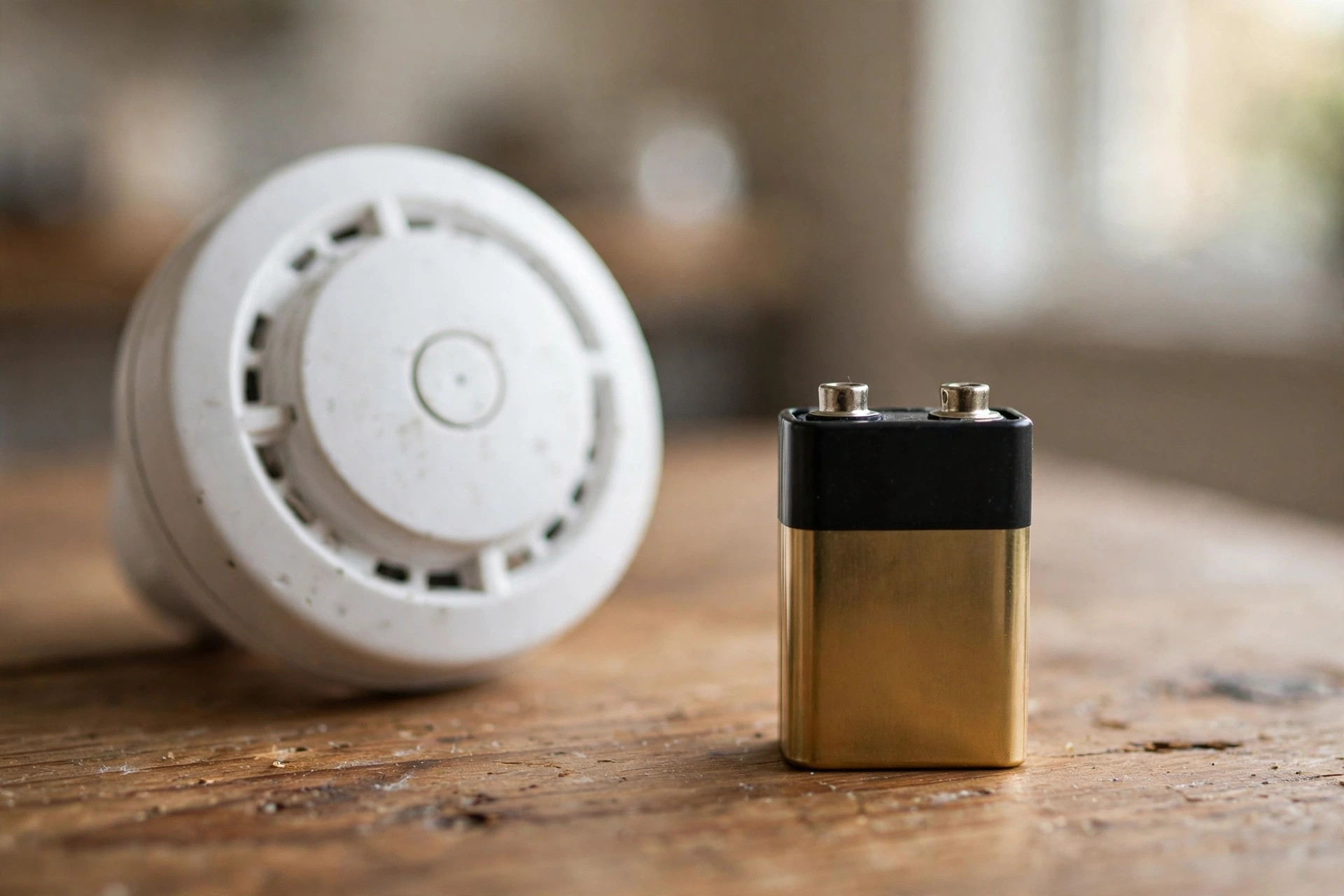
Second, write the installation date on the new unit in permanent marker, right next to the printed replacement date. Future-you will not remember which hallway alarm went up in which year, and a written date beats a memory every time. Third, set a calendar reminder for nine and a half years out — not ten, so you have time to shop. Finally, consider sealed 10-year-battery alarms for the replacement round: the battery is engineered to last the sensor’s full service life, so you eliminate the annual battery ritual and the temptation to “borrow” the 9-volt for a remote control.
One more habit closes the loop: keep the receipt or a photo of the new alarms’ date codes with your home records. If you sell the house, buyers and inspectors increasingly ask for alarm ages; if you ever file a fire-insurance claim, documented replacement dates remove a question the adjuster would otherwise ask. A thirty-second photo today prevents an argument years from now.
When you take the old units down, do not throw ionization detectors in household trash — they contain a tiny radioactive source. Most manufacturers run take-back programs, and many municipalities accept them at hazardous-waste collection. Photoelectric units can usually go in normal electronic waste.
Frequently Asked Questions
How often should smoke detectors be replaced?
Every 10 years from the date of manufacture, per NFPA guidance and manufacturer instructions. CO detectors expire sooner — typically 7 years — so replace combination units on the CO schedule.
Does the test button prove my detector still works?
No. The test button checks the battery, circuitry, and horn — not the sensing chamber. A contaminated or aged sensor can pass the button test and still fail to detect real smoke, which is why replacement follows the calendar, not the beep.
Where do I find the manufacture date?
On the back of the unit or inside the battery compartment — look for a manufacture date, a “replace by” date, or a date code. If there is no date at all, assume the unit is expired and replace it.
Do hardwired smoke detectors last longer than battery ones?
No. Hardwiring solves the power problem, not the sensor-aging problem. The sensing chamber contaminates and the electronics age identically. Hardwired alarms carry the same 10-year replacement rule — and most have a backup battery that needs attention too.
What should I do with old ionization detectors?
Do not put them in household trash; they contain a small americium-241 source. Use the manufacturer’s take-back program or your municipality’s hazardous-waste collection. Photoelectric units can go to normal e-waste recycling.